Afghanistan and Tajikistan: Joint investigation into deadly border clash
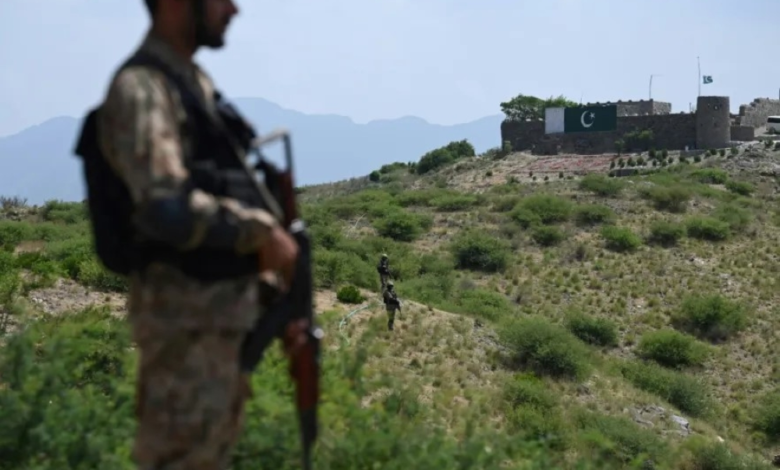
On Saturday, the Taliban authorities in Afghanistan announced the start of security cooperation and joint coordination with neighboring Tajikistan, with the aim of conducting a comprehensive investigation into the circumstances of a border clash that occurred last Thursday, which resulted in the death of five people, in an incident that raised renewed security concerns in the Central Asian region.
Details of the incident and official actions
According to official reports, the clash resulted in the deaths of two Tajik border guards and three militants whom Dushanbe described as members of a "terrorist organization." The Tajik National Security Committee explained in a statement carried by the official news agency Khovar that the three men had "illegally" crossed the border in Khatlon province, which borders Afghanistan, and were "neutralized" after an exchange of fire.
For his part, Afghanistan's acting Foreign Minister, Amir Khan Muttaqi, affirmed Kabul's seriousness in addressing the incident, noting at an event in the capital that he had held talks with his Tajik counterpart to prevent a recurrence of such violations. Muttaqi stated, "We are concerned that some malicious actors are seeking to undermine relations between the two neighboring countries," implicitly referring to armed groups that might be attempting to destabilize the region.
Background to geopolitical tension
This incident is particularly significant given the complex nature of relations between the two countries. Tajikistan shares a rugged, mountainous border with Afghanistan stretching approximately 1,350 kilometers, a border historically considered a sensitive point for regional security, as it is difficult to fully secure due to the harsh terrain. Since the Taliban's return to power in August 2021, bilateral relations have been strained, with Tajikistan adopting a hardline stance toward the new government in Kabul.
Tajik President Emomali Rahmon, who has ruled the country since 1992, is the only leader in Central Asia who has publicly and repeatedly criticized the Taliban, calling for the formation of an inclusive government that respects the rights of Afghanistan’s large Tajik minority, estimated at about 10 million people, or a quarter of the population.
Regional and international security concerns
The impact of this clash is not limited to the bilateral sphere but extends to regional and international security. Major powers, such as Russia and China, are watching the situation on the Afghan-Tajik border with great concern, fearing the infiltration of extremist groups into Central Asian countries. Recent months have witnessed sporadic border skirmishes, as well as attacks targeting foreign interests. Tajik authorities previously reported the deaths and injuries of Chinese citizens in attacks near the border late last year.
The current joint investigation is a rare step indicating the willingness of both sides to take a pragmatic approach to containing security tensions, despite deep political differences, in order to avoid the region sliding into chaos that could be exploited by cross-border armed groups.