The crescent moon of Sha'ban 1447 AH was sighted on Tuesday evening in the skies of Saudi Arabia
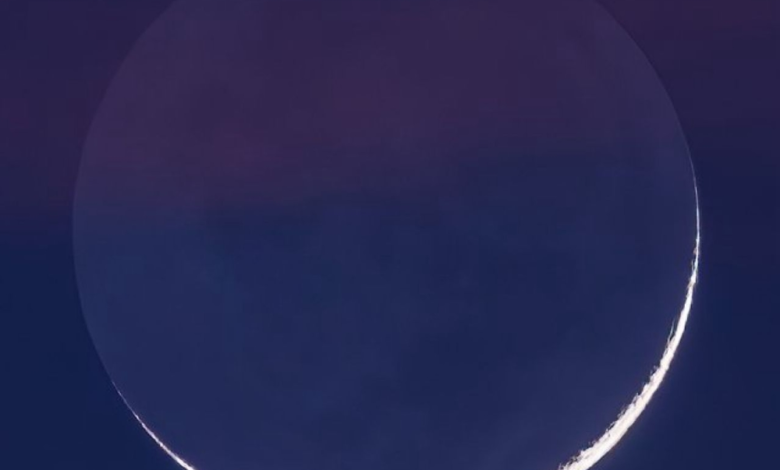
The head of the Jeddah Astronomical Society, Engineer Majid Abu Zahra, announced that the skies of the Arab world will witness a remarkable astronomical event this evening, Tuesday, January 20, 2026, with the sighting of the crescent moon of Sha'ban for the year 1447 AH, immediately after sunset. The crescent will grace the southwestern horizon in a beautiful display visible to the naked eye, weather permitting, providing an ideal opportunity for astrophotography enthusiasts and observers to capture this moment.
In his detailed astronomical statement, Abu Zahra explained that the moon had reached its central conjunction (new moon) phase on Sunday, 29 Rajab 1447 AH, corresponding to January 18, 2026, at 10:51 PM Mecca time. This moment marks the precise astronomical event at which the moon moves from west to east of the sun, thus completing one lunar cycle and beginning a new one around the Earth.
The importance of the month of Sha'ban and the astronomical heritage
The sighting of the crescent moon of Sha'ban holds immense importance in the Islamic world, not only because it is the eighth month of the Islamic calendar, but also because it represents the temporal gateway and spiritual preparation for the blessed month of Ramadan. Historically, Arabs and Muslims have been deeply interested in astronomy and the observation of the new moon, as their religious observances and rituals were closely linked to the lunar cycle. Accurately determining the beginning of Sha'ban is crucial for calculating the countdown to the night of Ramadan's crescent sighting and for identifying the middle of Sha'ban, a night that holds a special place in religious and cultural heritage.
The phenomenon of Earth's light and the creativity of the universe
In the context of observation, the head of the Jeddah Astronomical Society pointed out the possibility of observing a captivating astronomical phenomenon known as "Earthshine." This phenomenon consists of a faint, grayish glow appearing on the dark part of the moon's disk that does not receive direct sunlight. The cause of this glow is the reflection of sunlight off the Earth's surface (especially from clouds and oceans) and onto the moon, which then reflects back to us, giving the moon a beautiful three-dimensional appearance.
As the moon gradually moves away from the sun's glare and towards the east, its height and visibility will increase in the coming nights, making it a natural celestial guide that helps novice observers identify the positions of planets and bright stars near its apparent path.
An invitation to reflection and scientific culture
Abu Zahra concluded his remarks with an open invitation to seize this cold winter evening as an educational and recreational opportunity, especially for children and young people. Looking up at the sky and contemplating celestial bodies instills a love of exploration and scientific curiosity, and strengthens the connection to the universe. This night is a golden opportunity to escape the bright lights of the bustling city and enjoy the tranquility of the sky, where the new crescent moon symbolizes renewal and hope, and heralds the approaching month of Ramadan.