Seismic activity in Saudi Arabia 2025: 5 tremors recorded in the Eastern Province
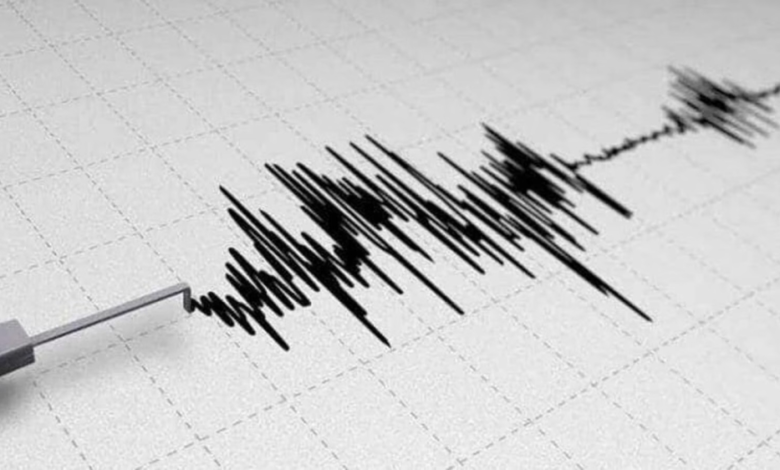
Saudi Arabia experienced significant seismic activity during 2025, as recorded by the National Seismic Monitoring Network of the Saudi Geological Survey. The Eastern Province was the most active, registering five earthquakes of varying intensity, the most recent of which occurred early Wednesday morning near Haradh. Additionally, seismic activity was observed in the southern Red Sea off the coast of Jazan.
Details of the Haradh earthquake and activity in the Eastern Province
In its latest monitoring, the National Seismic Network recorded an earthquake measuring 4 on the Richter scale in the Eastern Province early Wednesday morning, December 17, 2025. According to a statement from the authority, the tremor occurred at 1:11:23 AM, approximately 9 kilometers east of Haradh. This event is part of a series of earthquakes that have affected the region and the Arabian Gulf waters this year.
This tremor was not an isolated event; the eastern region has witnessed frequent activity over the past few months, as recorded by the stations:
- April 4, 2025: An earthquake in the Arabian Gulf with a magnitude of 4, 55 km east of Jubail city and a depth of 34.3 km.
- April 22, 2025: Another earthquake in the Arabian Gulf with a magnitude of 4.36, located 66 km east of Jubail.
- June 13, 2025: A minor earthquake of magnitude 3.7 in the waters of the Arabian Gulf.
- October 19, 2025: An earthquake of magnitude 4.34, 160 km northeast of Khafji.
Seismic activity detected in the Red Sea west of Jazan
Moving to the Kingdom's western coast, seismic activity was also present, with the National Seismic Network recording an earthquake in the southern Red Sea on Tuesday evening, July 29, 2025. The official spokesperson for the authority explained that the earthquake measured 4.68 on the Richter scale and occurred approximately 150 kilometers west of Jazan city, without causing any negative impact on coastal areas or residents.
Geological context and the importance of continuous monitoring
Seismic monitoring in the Kingdom is of paramount strategic importance due to the geological location of the Arabian Peninsula. Geologically, it is well-established that the Arabian Plate is in a state of continuous divergence from the African Plate (forming the Red Sea) and is colliding with the Eurasian Plate to the north and east (explaining seismic activity in the Arabian Gulf and the Zagros Mountains). This geological reality makes it natural for minor to moderate earthquakes to occur, which are often imperceptible and pose no immediate threat.
The Saudi Geological Survey plays a pivotal role in reassuring the public and protecting infrastructure, particularly in the Eastern Province, the Kingdom's economic heartland, home to oil fields and major industrial facilities in Jubail. Official data for all earthquakes recorded in 2025 confirms that there were no casualties or material damage, reflecting the robustness of the infrastructure and the efficiency of early warning and monitoring systems, which contribute to enhancing public safety and supporting sustainable urban planning.