Winter Solstice 2025: The beginning of winter and the shortest day of the year
Engineer Majed Abu Zahra, head of the Jeddah Astronomical Society, announced that Sunday, December 21, 2025, marks the official start of winter astronomically in the Northern Hemisphere. This announcement coincides with the winter solstice, when the sun's rays are directly overhead at the Tropic of Capricorn, marking its southernmost apparent point, in an annual cosmic event that reshapes the landscape of time and climate.
The winter solstice phenomenon scientifically
Abu Zahra explained that this time marks a pivotal point in the astronomical calendar, as the sun reaches its lowest point in the sky at noon. As a result, residents of the Northern Hemisphere experience the shortest daylight hours and longest nighttime hours of the entire year. The head of the Astronomical Society emphasized that this phenomenon, and the changing seasons in general, are unrelated to the Earth's proximity to or distance from the sun, as some believe. Rather, they are a direct consequence of the Earth's axial tilt of 23.5 degrees as it revolves around the sun, providing conclusive scientific evidence of the Earth's spherical shape.
Gradual transformation and the return of light
Abu Zahra announced the astronomical good news of the gradual shift in time, explaining that starting tomorrow, daylight hours will gradually increase minute by minute, while the length of the night will decrease, symbolically marking the sun's return to its apparent northward movement. This precise shift reflects the regularity of celestial bodies' movements and the accuracy of the cosmic order.
The historical and agricultural importance of the winter solstice
Historically, the winter solstice was not merely a fleeting astronomical event, but a pivotal moment upon which ancient civilizations relied to regulate their calendars. Ancient peoples used the observation of shadow movements to determine planting and harvesting seasons, as this day signaled the end of one season and the beginning of preparations for the next. Archaeological sites such as Stonehenge and the Karnak temples stand as living testaments to ancient peoples' keen interest in observing this moment, which represents the "rebirth of the sun" and the beginning of the end of the long period of darkness.
climatic and environmental impact
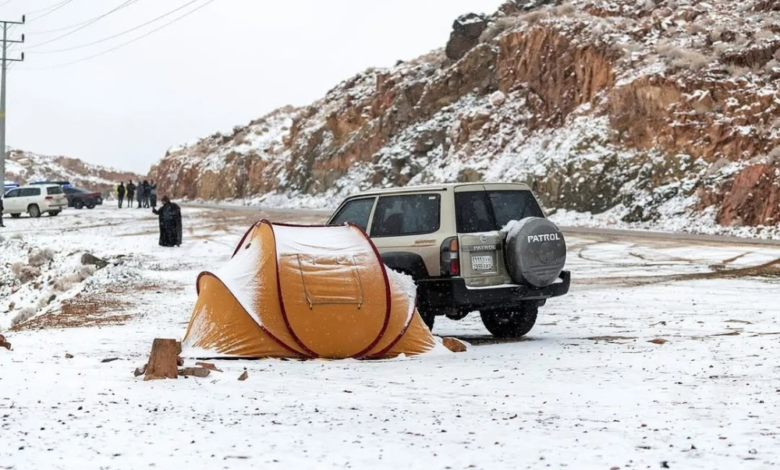
On the climatic front, the head of the association noted that the winter solstice marks the astronomical beginning of the season, but it does not necessarily mean that it is immediately the coldest day of the year. Due to what is known as the "thermal inertia" of the atmosphere and oceans, the peak of cold is delayed for several weeks after the solstice. Nevertheless, this event is accompanied by tangible changes in weather patterns in the Arab region, including a drop in temperatures, an increase in cloud formation, and rainfall that revitalizes the land and maintains ecological balance.
A golden season for astronomy enthusiasts
Engineer Majed Abu Zahra concluded his statement by inviting astronomy enthusiasts and photographers to take advantage of the long winter nights, describing this season as "the golden season for astronomical observation." This is due to the clear atmosphere and low humidity and dust levels, which make stars appear brighter and more luminous. Observers can enjoy viewing distinctive winter constellations such as Orion and its colorful nebulae, as well as observing meteor showers with exceptional clarity not available in other seasons.