Weather fluctuations in Saudi Arabia: Dusty winds and high waves
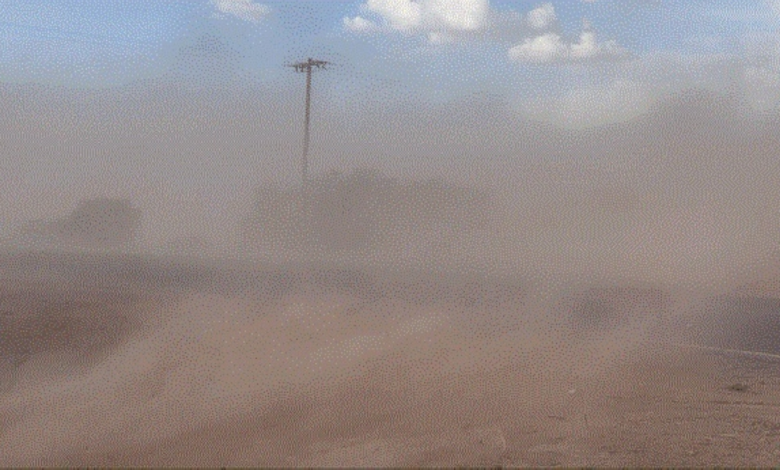
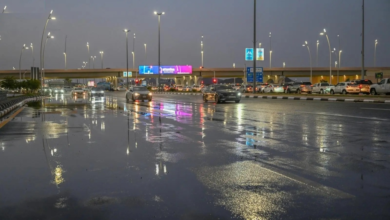
The National Center for Meteorology in Saudi Arabia issued a warning about a wave of unstable weather expected to affect most regions of the Kingdom starting Tuesday and continuing until next Saturday. The center warned of significant surface wind activity that will stir up dust and sand, leading to reduced horizontal visibility, along with a rise in wave height along the coasts.
Weather details and affected areas
According to the weather report, the direct effects of this wave will begin in the Tabuk, Madinah, and Makkah regions, including their coastal areas. It will also initially affect the Al-Jawf, Northern Borders, and Hail regions. The center explained that the peak impact of these active winds will be during daylight hours, necessitating caution, especially on highways and in open areas.
The geographical scope of these weather fluctuations is expected to gradually expand over the coming days, later extending its impact to include additional areas in the central, eastern, and southern parts of the Kingdom. Al-Qassim, Riyadh, the Eastern Province, and even Najran will all be affected, bringing most of the country under the influence of this weather system.
The climatic context of dust phenomena in the Kingdom
Dust storms and sandstorms are a recurring weather phenomenon in the Arabian Peninsula, caused by the region's geography, which includes vast deserts such as the Rub' al Khali and the Nafud al-Kabir. These deserts act as a primary source of dust and sand carried by the wind. These phenomena are particularly active during seasonal transitions or when the region is affected by deep low-pressure systems or strong high-pressure systems that create a sharp atmospheric pressure gradient, resulting in strong winds capable of carrying enormous quantities of dust over long distances.
Expected effects and the importance of preventive measures
These weather fluctuations have wide-ranging effects on various aspects of daily life and public safety. From a health perspective, dust poses a risk to those with respiratory conditions such as asthma and allergies, as well as the elderly and children. Health authorities advise staying indoors as much as possible, keeping windows tightly closed, and wearing protective masks when going out is necessary.
In terms of transportation, reduced horizontal visibility increases the risk of road accidents and may cause delays or cancellations of flights at affected airports. High waves also pose a danger to maritime navigation, especially for small boats and fishermen, and require extreme caution from beachgoers. The effects of these dust storms sometimes extend beyond national borders, impacting neighboring countries, making it a phenomenon with regional dimensions.