Japan's snap election: Takaichi poised to consolidate power with a landslide majority
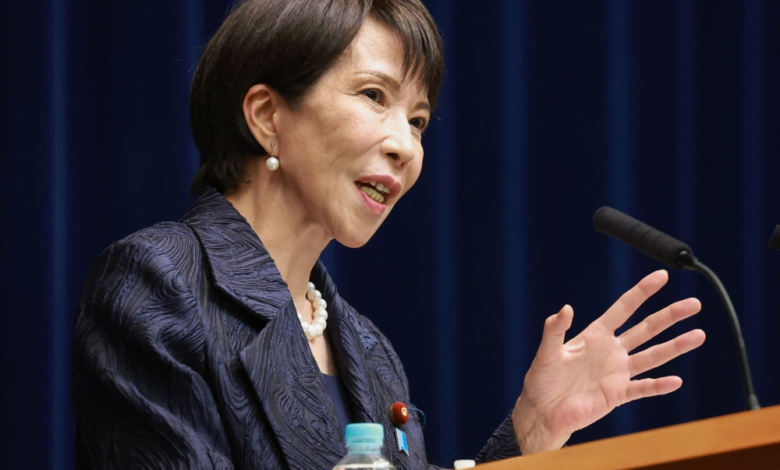
Japanese voters head to the polls on Sunday for a snap parliamentary election seen as a pivotal moment in Japan's modern political history. The ruling Liberal Democratic Party, led by Prime Minister Sanae Takaichi , seeks to capitalize on its growing popularity to secure a clear mandate that would solidify its grip on power and provide its government with the stability needed to implement its political and economic agenda.
A test of confidence for the first female prime minister
These elections are particularly significant as they represent the first real electoral test for Takaichi, who made history as Japan's first female prime minister. On January 19, Takaichi dissolved parliament and called for early elections, a strategic move aimed at capitalizing on her political "honeymoon" with voters, as opinion polls indicated her government enjoyed approval ratings approaching 70%, a record high compared to her predecessors in recent years.
Historically, the Liberal Democratic Party (LDP) has dominated Japanese politics for decades, but Takaichi is attempting to present a renewed image of the party, one that combines conservative traditions with strong female leadership. During her campaign, she stated that she wanted the people to be the ones to decide her suitability for the position, rather than relying on internal party appointments.
Parliamentary majority and fragmented opposition
Pre-election forecasts and statistical data indicated that the ruling party was on track to easily surpass the 233-seat threshold required for a simple majority. Analysts went even further, predicting that the ruling coalition (the Liberal Democratic Party and Komeito) would win more than 300 of the 465 seats, giving it a "compelling majority" that would allow it to pass legislation smoothly.
In contrast, the Japanese opposition is clearly fragmented. The centrist New Reform Alliance, which includes the Constitutional Democratic Party, faces the risk of losing half its current seats. Observers attribute this to the opposition's failure to offer voters a convincing alternative to the stability promoted by the Takaichi government.
The economy and inflation are the focus of voters' attention
Domestically, the economy and the high cost of living dominated the election campaigns. With inflation rates remaining above 2% for nearly three years, the erosion of purchasing power became the biggest concern for Japanese families. In response to these concerns, Takaichi pledged to exempt food items from the 8% consumption tax, a campaign promise that addressed citizens' immediate needs and helped maintain her popularity despite global economic challenges.
Foreign policy and alliance with Washington
Internationally, Takaichi adopts a hawkish approach, particularly regarding security issues and relations with China. Her statements about the possibility of military intervention in the event of a conflict in Taiwan have sparked diplomatic controversy, but have also reinforced her image as a strong leader who prioritizes national security.
The prime minister enjoys significant international support, most notably from US President Donald Trump, who described her on Truth Social as a "strong and wise leader" and expressed his eagerness to welcome her to the White House next March. This support reflects Washington's desire for continued political stability in Tokyo, the United States' most important strategic partner in the Indo-Pacific region.