Yemeni Health Ministry official: Saudi support is a cornerstone of resilience against epidemics
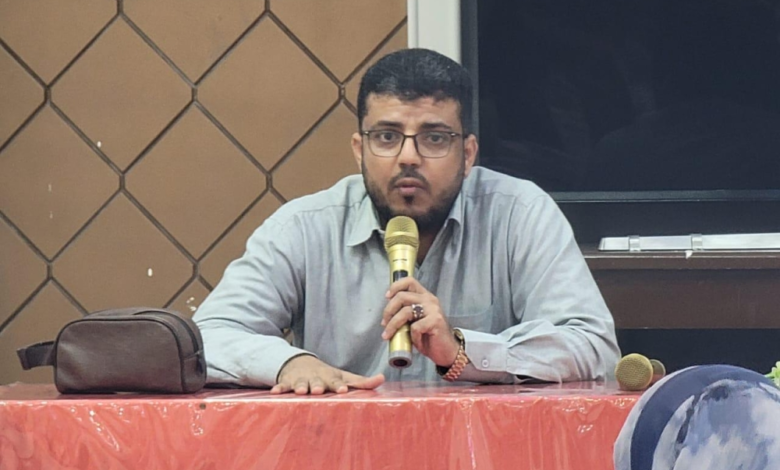
Amid one of the most complex humanitarian crises the world has witnessed in modern times, Yemen’s health sector teeters on the brink of collapse, burdened by years of conflict that have eroded infrastructure and depleted resources. UN reports confirm that more than half of Yemen’s health facilities are either out of service or operating at half capacity, leaving millions of Yemenis facing critical health challenges. In this context, Al-Youm newspaper conducted an extensive interview with Dr. Abdulraqib Al-Haidari, Assistant Deputy Minister for Population Affairs at the Yemeni Ministry of Public Health and Population, to shed light on the state of the health system and the pivotal role of the Kingdom of Saudi Arabia in supporting this vital sector.
Humanitarian context and challenges of survival
Dr. Al-Haidari explained that the health situation in Yemen is going through an extremely sensitive and complex phase, resulting from the combined effects of war and severe economic deterioration. He pointed out that the challenge is no longer limited to developing services, but has become a "battle for survival" to ensure the continuation of a minimum level of healthcare. He added that the fragile operation of facilities and the widening funding gap have made the health system almost entirely dependent on external support, at a time when the population's needs are steadily increasing.
Saudi support: A strategy of stability and sustainability
Speaking about regional roles, Al-Haidari described the Saudi role as “the most consistent, clear, and influential.” He emphasized that the Kingdom, through its humanitarian arm, the King Salman Humanitarian Aid and Relief Center, and the Saudi Program for the Development and Reconstruction of Yemen, did not treat the health sector as a passing emergency, but rather as a sustainable fraternal responsibility. He noted that this support served as a “safety valve,” preventing the collapse of vital facilities at critical moments, by providing fuel, medicine, and paying staff salaries in some sectors, in addition to rehabilitation projects that ensure the continuity of services.
The Undersecretary explained that the partnership with the Kingdom goes beyond the concept of donor and beneficiary to a strategic partnership that recognizes that Yemen’s health security is an integral part of regional health security, which contributes to reducing cross-border epidemics.
Pandemics and brain drain: everyday challenges
The discussion touched on the issue of epidemics, with Al-Haidari emphasizing that diseases such as cholera and dengue fever remain a persistent seasonal threat, closely linked to weak water and sanitation infrastructure. He warned that any reduction in international funding for epidemiological surveillance programs could lead to serious health setbacks.
He also highlighted the issue of "medical personnel migration," describing it as a silent and extremely serious challenge. He explained that Yemen is losing years of experience and training as a result of doctors and nurses emigrating in search of greater stability and security, necessitating radical solutions to improve the work environment and provide incentives.
Problems of international coordination
Regarding the performance of other organizations and donors, Al-Haidari stressed the importance of institutional coordination through the Ministry of Health to ensure the effectiveness of aid. He pointed out problems with some interventions carried out through parallel channels or unofficial entities, which led to a fragmentation of efforts and duplication of projects without achieving a sustainable impact. He emphasized the government's welcome of any support channeled through official frameworks and respecting the state's institutional sovereignty.
A vision for the future
Al-Haidari concluded his remarks with a realistic vision for the future of the health sector, noting that the ministry is working according to multiple scenarios ranging from maintaining the minimum level of services in the event of continued funding shortages, to recovery and reconstruction plans in the event of the availability of sustainable development support, always with a focus on ensuring access to life-saving services for citizens in rural and remote areas.