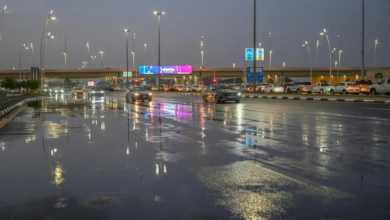
Al-Jawf weather: Meteorology warns of dust storms and reduced visibility until Wednesday
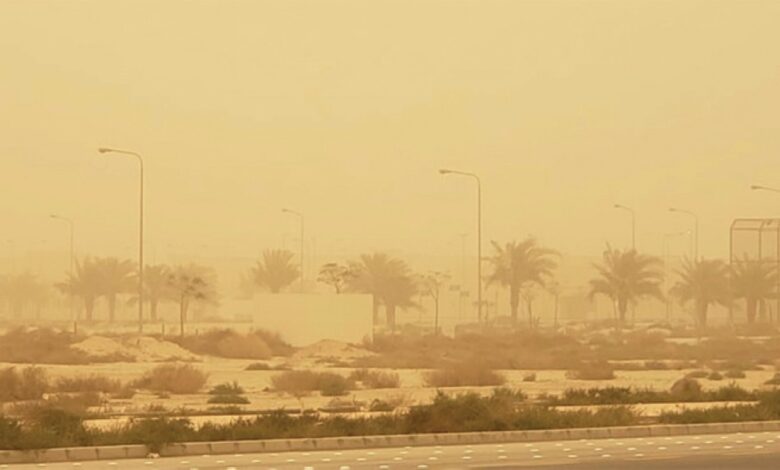
The National Center for Meteorology in Saudi Arabia issued an important alert on Tuesday regarding the weather in the Al-Jawf region, warning of the continued impact of dust and sandstorms that are significantly reducing horizontal visibility in several governorates in the region.
Weather details in Al-Jawf cities
The center explained in its daily report that the active weather conditions are directly affecting the city of Sakaka and the governorate of Dumat al-Jandal , where these areas are experiencing dust storms accompanied by strong winds. These winds have stirred up dust and sand, leading to a near-total loss of horizontal visibility, with visibility dropping to one kilometer or less in some areas. This necessitates caution from road users.
In the same context, the weather conditions extended to the governorates of Al-Qurayyat and Tabarjal , where the report indicated that they were affected by blowing dust and active winds, causing horizontal visibility to drop to between 1 and 3 kilometers. The National Center for Meteorology stated that this ongoing weather condition is expected to continue until 2:00 AM on Wednesday.
The geographical and climatic context of the Al-Jawf region
These warnings are particularly important given the geographical location of the Al-Jawf region in northern Saudi Arabia. The region is characterized by its open desert landscape, making it susceptible to strong winds that stir up dust and sand, especially during seasonal transitions. These weather phenomena are part of the prevailing climate in the Arabian Peninsula, where temperature and atmospheric pressure variations play a significant role in surface wind activity.
Weather conditions and safety guidelines
Dust storms directly impact daily life and traffic, particularly on highways and open roads connecting the cities and governorates of the Al-Jawf region, or those linking the Kingdom to neighboring countries via the northern border crossings. Relevant authorities, such as Civil Defense and Highway Patrol, typically issue guidelines for dealing with such weather conditions, including:
- It is necessary to reduce speed while driving and leave a sufficient safety distance.
- Use fog lights or pull over if visibility is completely zero.
- Patients with respiratory illnesses, asthma, and the elderly were advised to stay indoors and avoid direct exposure to dust in order to protect their health.
The National Center of Meteorology continues its vital role in monitoring the atmosphere and issuing early warnings through its automated system, to ensure that accurate information reaches citizens and residents, which contributes to protecting lives and property and reducing the negative effects of weather fluctuations.