The Kremlin welcomes European dialogue, while London refuses to engage with Putin
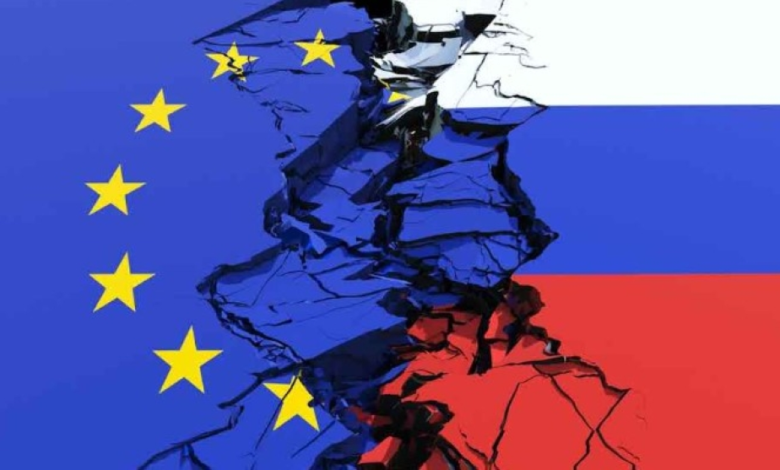
In a significant development in the complex geopolitical landscape since the outbreak of war in Ukraine, the Kremlin welcomed on Friday the new directions shown by several major European capitals, most notably Rome and Paris, regarding their readiness to resume severed channels of dialogue with Moscow. Russian presidential spokesman Dmitry Peskov described these signals as a "positive development," reflecting a potential shift in the rigid diplomatic wall that has been imposed on Russia since February 2022.
Background of tension and history of strained relations
To understand the significance of this statement, one must consider the historical context of the crisis. Since the start of the Russian military operation in Ukraine in 2012, Russian-European relations have entered a dark period unseen on the continent since the Cold War. The European Union has imposed successive rounds of economic sanctions, expelled hundreds of diplomats, and brought political dialogue to a near standstill. The European strategy had relied on the complete isolation of Moscow to force it to back down. However, recent statements indicate a strategic reassessment in some European capitals, which recognize that security and stability on the continent cannot be achieved by ignoring its largest eastern neighbor.
Divergent European positions: between pragmatism and rejection
Peskov confirmed to reporters that Moscow had taken note of recent statements by European leaders, pointing out that voices in Paris, Rome, and even Berlin were beginning to speak of the need for dialogue with Russia to ensure strategic stability in Europe. This approach aligns perfectly with the Russian vision, which has long advocated for a new European security architecture.
Italian Prime Minister Giorgia Meloni had explicitly called for the appointment of a European "special envoy," arguing that the time had come to engage in dialogue with Russia. Similarly, French President Emmanuel Macron and German Chancellor Friedrich Merz maintained that establishing a long-term balance with Russia was essential for the European Union to look to the future with confidence, reflecting a desire to break the current military and political deadlock.
The British position: Adherence to a hardline stance
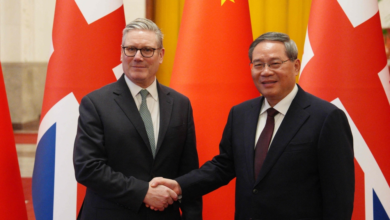
In stark contrast to the softening stance emerging in other EU countries, the UK continues to maintain a hardline position. The Kremlin has strongly criticized the British position, describing it as "destructive" and "extremist." A Downing Street spokesperson confirmed that Prime Minister Keir Starmer has no intention of engaging with Russian President Vladimir Putin, defying calls from his European counterparts.
London believes the priority lies in supporting Ukraine militarily and politically to achieve a "just peace" from a position of strength, noting that the Russian president has shown no real indication of ending the offensive. Despite this, the British government confirmed the continuation of "regular" contacts through diplomatic channels and embassies, but without elevating the dialogue to the political leadership, highlighting the deep divisions within the Western camp on how to address the war and peace process in Eastern Europe.