Vitamin D analysis: Interpreting results, deficiency symptoms, and predisposition
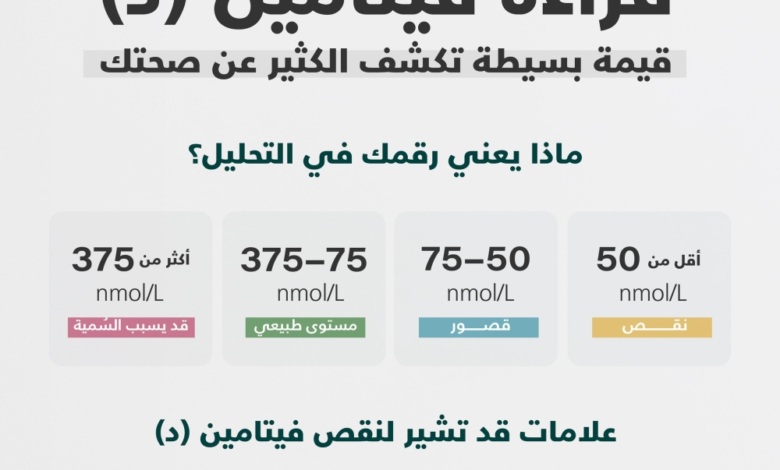
Vitamin D is one of the most vital elements the human body needs to maintain bone health and strengthen the immune system. Given its crucial importance, vitamin D testing a routine and essential medical procedure for assessing overall health. According to the Gulf Health Council, this test is not simply about determining the number of vitamin D levels, but primarily aims to detect any potential bone disorders or calcium deficiencies that could lead to long-term health complications.
General context and importance of the examination
Despite the abundance of sunshine in our Arab region throughout the year, modern lifestyles, including spending long periods indoors and avoiding extreme heat, have led to a noticeable increase in vitamin D deficiency. This reality makes regular testing essential, especially for individuals with chronic conditions that may impair vitamin absorption or be affected by its deficiency, such as:
- Asthma and respiratory problems.
- Psoriasis and immune-related skin diseases.
- Osteoporosis (especially in the elderly and postmenopausal women).
- Some other autoimmune diseases.
Reading the analysis results: What does your number mean?
Upon receiving your lab results, you may find numbers that require careful interpretation to determine the next step in treatment. Levels are typically categorized (in nanomoles per liter) as follows:
- Less than 50: Indicates deficiency that requires treatment under medical supervision.
- From 50 to 70: This indicates a deficiency in the level, and it is recommended to improve it through food or supplements.
- From 75 to 375: This is the normal and ideal level for health.
- Over 375: A very high level that may lead to toxicity and adverse health problems.
Warning signs of vitamin D deficiency
Before the test is performed, the body may send distress signals indicating low vitamin levels. It is important to pay attention to the following symptoms:
- Experiencing persistent pain and tenderness in the bones, which may indicate the beginning of rickets.
- General muscle weakness and a feeling of rapid fatigue.
- Increased susceptibility to fractures even with minor injuries.
- The appearance of bone deformities in children (rickets).
- Mood swings and feelings of depression without a clear reason.
How do you prepare for the analysis?
One of the advantages of this test is that it is simple and uncomplicated. Usually, no special preparation or fasting is required before the sample is taken. All you need to do is:
- Inform your doctor about all medications and dietary supplements you are currently taking.
- Disclosing any health problems or chronic illnesses you suffer from is essential to ensure accurate interpretation of the results.
Maintaining normal levels of vitamin D is not just a way to protect against osteoporosis, but also an investment in overall body health and immunity against various diseases.