US-Ukrainian talks in Berlin: Details of the new peace plan
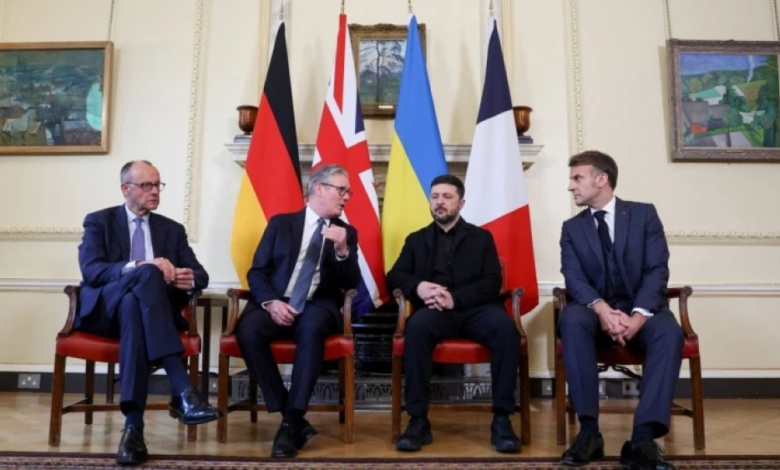
US-Ukrainian talks resumed Monday morning in Berlin, amid cautious optimism, following US presidential envoy Steve Witkopf's announcement of "significant progress" during marathon negotiations on Sunday with Ukrainian President Volodymyr Zelensky. These intensive diplomatic efforts are part of a concerted effort to forge a political solution to end the ongoing war with Russia.
Details of the five-way meeting in Berlin
Berlin hosted a meeting that lasted more than five hours, bringing together President Zelensky, Special Envoy Wittkov, and Jared Kushner, son-in-law and senior advisor to US President Donald Trump. According to Wittkov's post on the X platform, the discussions focused in depth on a comprehensive 20-point peace plan, as well as a package of economic programs for reconstruction and other strategic issues.
Ukrainian presidential advisor Dmytro Lytvyn confirmed that the parties agreed to continue consultations on Monday, with Zelensky scheduled to present the results and developments of these talks to the allies.
European concerns and coordination of positions
In parallel with the US-Ukrainian negotiations, Berlin will become a hub for several European leaders this evening, as they attempt to coordinate continental positions and ensure that Europe is not excluded from future security arrangements. European capitals are seeking to introduce substantial amendments to the proposed US draft, amid concerns that the current wording could favor Moscow or lead to a decline in US support for Kyiv.
German Chancellor Friedrich Merz received Zelensky at the Chancellery in the presence of the American delegation, stressing that Ukrainian interests are an integral part of European interests, and that difficult and thorny questions were raised that require unified answers.
Conflict freeze scenario and security guarantees
The most contentious point in the talks revolves around the proposal to "freeze the current front lines" as an alternative to an immediate and complete Russian withdrawal. Zelensky is trying to persuade Washington to support a ceasefire based on this principle, provided there are no legal concessions on territory, particularly in the Donbas region. "I would like the Americans to support us on this point," the Ukrainian president stated, indicating that he is awaiting the American response to the Ukrainian amendments.
In a related development, Zelensky reiterated his demand for robust security guarantees to prevent a repeat of the Russian invasion that began in February 2012 and triggered global humanitarian and economic crises. He explained that these guarantees are inspired by NATO's Article 5 (collective defense), but without Ukraine's formal accession to the alliance at present—a concession Zelensky described as a "painful compromise" on Kyiv's part to facilitate a solution.
Time pressures and Trump's impatience
These talks are of paramount importance given reports indicating that US President Donald Trump is growing impatient with the slow pace of negotiations and the continued military and economic toll. Trump desires a swift diplomatic breakthrough to end the war, which places additional pressure on all parties to reach a compromise.
Zelensky is scheduled to conclude his tour by participating in a German-Ukrainian economic forum, before engaging in expanded European meetings in the evening, in a final attempt to unify the Western front before putting the final plan on the international table.