Washington and Moscow: Commitment to nuclear stability after New START
In a significant development in international relations and global strategic security, the United States and Russia affirmed their shared commitment to maintaining nuclear stability and working diligently to reduce strategic weapons stockpiles, in a move aimed at reassuring the international community amid escalating geopolitical tensions.
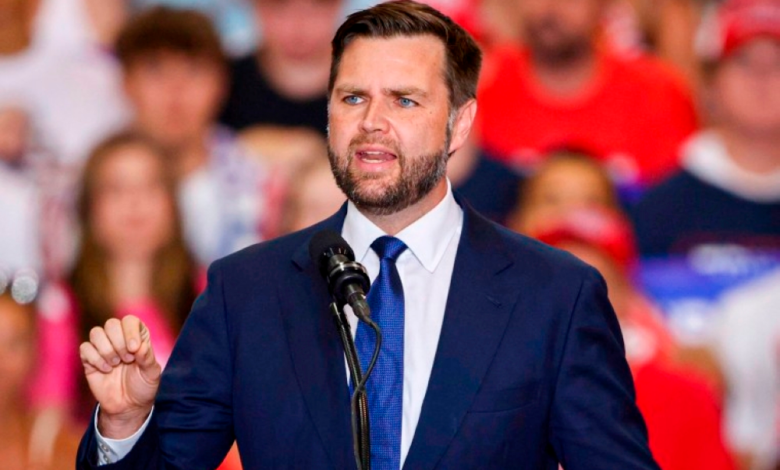
US Vice President J.D. Vance expressed his country's full readiness on Thursday to open channels of dialogue and work together with Russia and China, as well as other countries, to reduce the number of nuclear weapons deployed worldwide. In a statement reflecting a new direction for the US administration, Vance said, "The United States will work with China, Russia, and any other country, whether friend or foe, to try to reduce the number of nuclear weapons in the world," emphasizing his firm belief that this path is "the most important thing that can be done for global peace and stability.".
The Kremlin's position and strategic responsibility
For its part, the Russian side responded to these statements with a similar stance. Kremlin spokesman Dmitry Peskov affirmed that Russia would maintain a responsible and measured approach to the issue of strategic stability in the field of nuclear weapons. This Russian affirmation comes at a critical time, coinciding with the expiration of the New START treaty between the two superpowers, which had imposed strict limits on strategic offensive weapons.
Historical background: The end of the “New Start” era
These statements are of paramount importance given the legal vacuum left by the expiration of the New START Treaty. Signed in 2010, this treaty was the last pillar of nuclear arms control between Washington and Moscow. Historically, the agreement limited the nuclear arsenals of both countries to specific limits, including 800 deployed and non-deployed delivery systems and 1,550 operational nuclear warheads. With its expiration, the world anxiously awaited the possibility of the superpowers sliding into a new, unbridled arms race.
Geopolitical dimensions and international influence
The US call to include China in arms control talks represents a fundamental shift in the concept of nuclear deterrence, moving the equation from a bipolar one (US and Russia) to a more complex trilateral one. This mutual commitment to stability carries anticipated positive effects at both the regional and international levels
- Internationally: This rapprochement contributes to reducing global tension and minimizing the risk of a nuclear confrontation breaking out by mistake or miscalculation, thus enhancing the prospects for global economic growth away from the militarization of economies.
- Regionally: The calm between the great powers has a positive impact on conflict zones in the Middle East and Europe, where regional conflicts are often linked to international polarization.
The challenge now is to transform these statements and declared intentions into concrete working mechanisms and new agreements that replace the old frameworks, to ensure a safer future for future generations.