US strikes in Syria kill ISIS fighters in retaliation for Palmyra attack
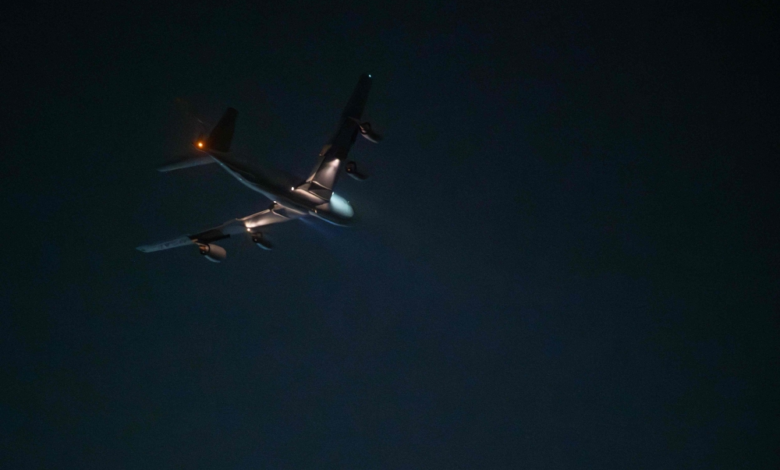
US forces launched a series of intense and focused airstrikes against Islamic State (ISIS) positions in Syria, in a large-scale military operation that came as a direct and decisive response to the attack that targeted US forces in the ancient city of Palmyra about a week ago.
According to the Syrian Observatory for Human Rights, these nighttime airstrikes killed at least five members of the terrorist organization. Rami Abdel Rahman, the Observatory's director, explained to AFP that the strikes were highly precise, eliminating "the leader of a cell responsible for drones" in Deir Ezzor province in eastern Syria, representing a significant blow to the organization's technical and military capabilities.
Details of the military operation and its objectives
Syrian security sources confirmed that the US airstrikes were not limited to a single area, but rather covered a wide geographical area targeting active ISIS cells in the provinces of Homs (central), Deir ez-Zor (east), and Raqqa (northeast). The United States officially announced that it had struck more than 70 strategic ISIS targets across central Syria, using a diverse arsenal that included fighter jets, attack helicopters, and heavy artillery.
President Donald Trump described the operation as a “very strong retaliatory strike,” emphasizing his country’s determination to protect its forces and pursue terrorists. These military actions come after a bloody week that saw the deaths of three Americans, including two soldiers, in a treacherous attack in Palmyra, Homs province—an attack that Washington attributed to the Islamic State group, although the group has not officially claimed responsibility.
Strategic context: The war of attrition in the Syrian desert
To understand the dimensions of this event, one must consider the strategic shift that the Islamic State underwent after its territorial defeat and the collapse of its so-called “caliphate” in 2019. The organization transitioned from controlling territory to operating as sleeper cells and armed groups, using the vast Syrian desert as a safe haven. The rugged desert regions stretching between Homs and Deir ez-Zor provide an ideal environment for the group’s hit-and-run tactics against local and international forces.
Intelligence reports indicate that the organization is attempting to regroup by targeting supply lines and military bases, exploiting the difficult terrain to launch surprise attacks. The targeting of the "drone cell leader" underscores the international coalition's concerns about the organization's evolving tactics and its pursuit of modern weaponry that threatens regional security.
Regional and international significance of the strikes
These strikes carry multiple messages that go beyond mere military retaliation. Internationally, the United States reaffirms its ongoing commitment to combating terrorism and preventing the resurgence of ISIS as a force threatening global stability. Regionally, these operations aim to undermine the group's ability to exploit security vacuums in Syria and ensure that the Syrian desert does not become a launching pad for cross-border terrorist operations.
Continued military pressure on the remnants of the organization is a key pillar of the international coalition’s strategy, as Washington and its allies realize that laxity in pursuing these cells could give the organization a chance to catch its breath and recruit new members, thus returning the region to square one of violence.