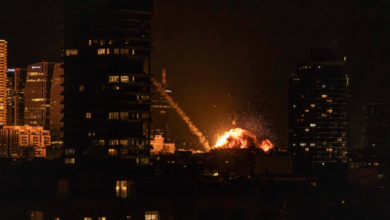
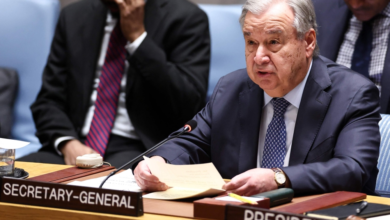
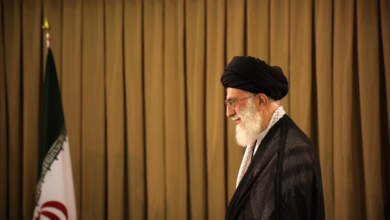
The Security Council is discussing the Iranian attack and its repercussions on the region
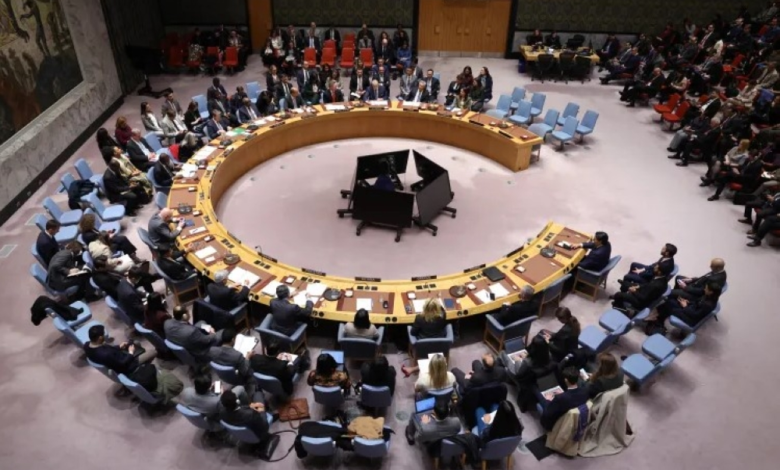
An emergency session of the UN Security Council convened in New York at Israel's request to discuss the repercussions of the unprecedented Iranian attack that targeted Israeli territory on Saturday night. This meeting comes at a critical juncture, as the world awaits Israel's potential response amid escalating fears of a wider regional war that could destabilize the entire Middle East.
Background to the escalation: From Damascus to direct attack
Tensions escalated dramatically on April 1, 2024, when an airstrike, attributed to Israel, targeted the Iranian consulate in the Syrian capital, Damascus. The attack killed several senior commanders of the Iranian Revolutionary Guard, including General Mohammad Reza Zahedi. Iran vowed an “inevitable” and “painful” response, considering the attack a violation of its sovereignty and an attack on its diplomatic territory.
In response, on the night of April 13, Iran launched a large-scale attack—its first direct attack from its own territory against Israel. The attack involved the launch of more than 300 drones, cruise missiles, and ballistic missiles. Israel and its allies, primarily the United States, Britain, France, and Jordan, announced that they had intercepted 99% of these projectiles before they reached their targets, thus minimizing casualties and material damage.
The importance of the event and its expected impact
This attack represents a dangerous strategic shift in the long-standing conflict between Iran and Israel, which was previously waged through a “shadow war” and proxies in the region. The move to direct confrontation raises the level of risk to unprecedented levels.
Regionally, these developments have brought the entire region to the brink. There is a real fear that any strong Israeli response could provoke a counter-response from Iran or its proxies, such as Hezbollah in Lebanon, potentially igniting a multi-front war. Internationally, the attack has raised serious concerns among world powers, who have been quick to call for restraint. In this context, UN Secretary-General António Guterres condemned the “dangerous escalation,” calling for an “immediate cessation of hostilities” to avoid a devastating confrontation in the Middle East that neither the region nor the world can afford.