The National Afforestation Program adopts 134 plant species for the Makkah environment
In a strategic move reflecting the Kingdom of Saudi Arabia’s commitment to environmental protection and sustainability, the National Afforestation Program today announced a significant scientific and environmental achievement: the identification and classification of more than 134 native plant species perfectly suited to the environment of the Makkah region. This step is a key component of efforts to enhance vegetation cover and combat desertification, and directly contributes to achieving the goals of the “Green Saudi Arabia” initiative, which aims to plant 10 billion trees across the Kingdom in the coming decades.
A key pillar of Vision 2030
This step gains its importance from its close alignment with the Kingdom's Vision 2030, as reliance on native plant species is a cornerstone for ensuring the sustainability of afforestation projects. Native plants are distinguished by their superior ability to adapt to harsh climatic conditions and their limited water requirements compared to imported plants, thus contributing to the preservation of groundwater resources and enhancing the efficiency of government spending on environmental projects. This approach represents a qualitative shift in landscaping and environmental agriculture strategies in the region, replacing introduced vegetation with native species that restore balance to the ecosystem.
Unique biodiversity and genetic richness
The program explained in its report that the approved list boasts a unique biodiversity that reflects the richness of nature in Mecca. The list includes perennial and large trees, climbing shrubs, and annual and grassy plants. Among the most prominent species that will form the basis of upcoming afforestation projects are: the jujube tree, the moringa tree, the acacia, and the mangrove that grows along the coast, in addition to aromatic and medicinal plants such as lavender and senna, and native wild trees such as the Lycium, the Arak tree, the Talh tree, and the Samar tree.
The environmental report revealed that these plants descend from ancient plant families and lineages, most notably the legume family (Fabaceae), the pistachio family (Pistacia terebinthus), the acanthaceae family (Acanthaceae), the oleander family (Acanthaceae), the asparagus family (Asteraceae), the asteraceae family (Aceraceae), the olive family (Oliveae), and the jujube family (Ziziphus spina-christi). This diversity reflects the genetic richness of the region's lands and their capacity to support multiple species such as the frankincense family (Bhagonia), the marigold family (Amaranthaceae), the milkweed family (Aceraceae), and the mallow family (Malva oleifera), which form an integral part of the area's natural identity.
The topography of Mecca: an environment that fosters diversity
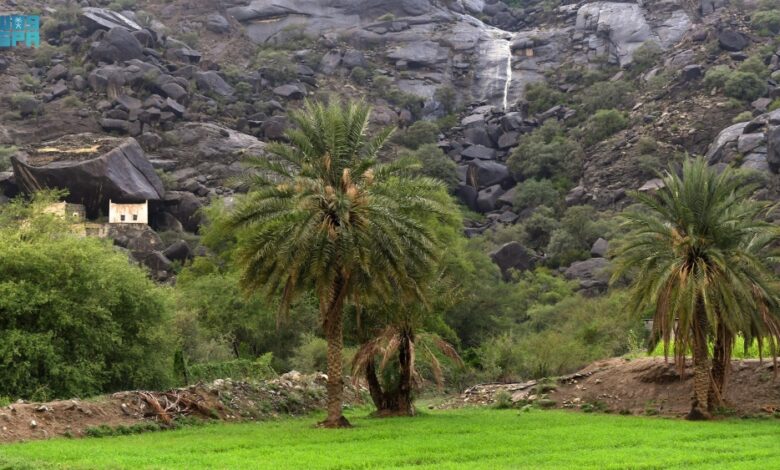
Geographically, the Makkah region is characterized by a stunningly diverse topography, encompassing coastal plains (Tihama), towering mountains (Sarawat Mountains), and deep valleys. The program highlighted that the competitive advantage of the selected plants lies in their remarkable ability to thrive in these contrasting environments. Some species flourish in coastal plains and salt flats, while others climb mountain peaks and rocky slopes, and still others blanket valleys, meadows, and ravines, inhabiting sand dunes and deserts. This makes them a strategic choice for sustainable afforestation projects across the region's various governorates.
Community partnership for a green future
The National Afforestation Program is leading a broad movement to integrate these species into community and governmental initiatives, aiming to activate partnerships with the private and non-profit sectors. This movement aims to raise awareness of the importance of using native plants and promote a culture of environmental volunteerism among community members, ensuring the restoration of natural balance and protecting lands from degradation. This will positively impact the quality of life and improve the climate, especially in holy sites that receive millions of visitors annually.