Al-Sudais: Oppressing people is the most heinous form of injustice, and its consequences will be on the Day of Resurrection
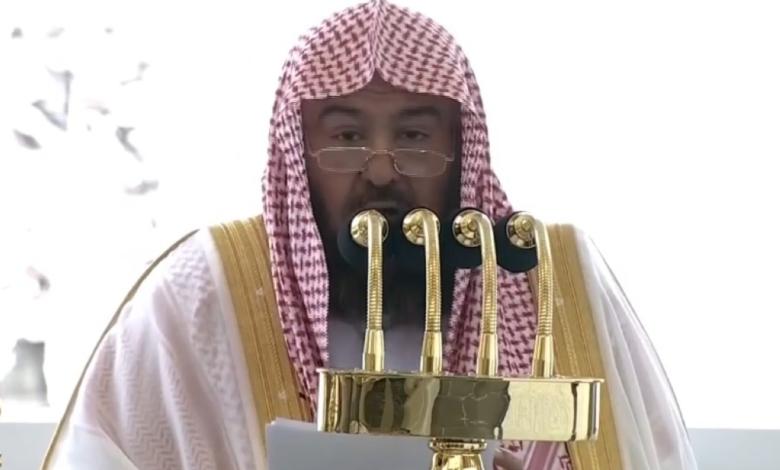
During his Friday sermon, the Imam and preacher of the Grand Mosque in Mecca, His Excellency Sheikh Dr. Abdul Rahman Al-Sudais, emphasized that justice is the foundation of stable societies. He strongly warned against the dangers of succumbing to injustice, particularly the injustice inflicted upon others, which he described as one of the most heinous forms of oppression and one with the most severe consequences. He explained that the world today is experiencing increasing materialism and a rise in conflicts, making the need to safeguard the rights of individuals and combat all forms of infringement upon them more urgent than ever before.
Reasons for the spread of injustice and the absence of values
Sheikh Al-Sudais pointed out that the root of the problem lies primarily in the weakness of religious conscience and the absence of firmly established moral values. This creates individuals whose sole purpose is to perpetrate injustice and seek out the faults and shortcomings of others. He explained that the dominance of materialism over spirituality and morality leads to hardened hearts, necessitating a serious effort to remind people of the comprehensive principle of social cohesion and to uphold the legal foundations that safeguard rights and preserve dignity. This will strengthen the message of awareness and solidify the impact of sound social development.
Legal context: The rights of people are based on mutual respect
In expanding upon the legal concept upon which the preacher of the Grand Mosque based his argument, violating the rights of individuals is considered in Islamic jurisprudence to be more serious than neglecting the rights of God alone. This is because God's rights are based on forgiveness, while the rights of individuals are based on strictness and accountability. These words acquire particular significance as they emanate from the pulpit of the Grand Mosque, the direction of prayer for Muslims, serving as a universal guiding message affirming that Islam is a religion that safeguards civil and personal rights as much as it commands acts of worship.
The truly bankrupt one is on the Day of Resurrection
His Eminence emphasized that injustice is the root of all evil, and that the Lord of the heavens and the earth has warned against it in the sacred hadith: “O My servants, I have forbidden injustice for Myself and made it forbidden among you, so do not wrong one another.” Al-Sudais focused on a crucial point concerning the fate of the oppressor, explaining that oppressing others is a grave sin fraught with bloody thorns that lead its perpetrator to the abyss. He illustrated a tragic image of the servant who may perform all the pillars of Islam—prayer, fasting, and pilgrimage—falsely believing that these will save him on the Day of Judgment, yet he arrives burdened with the injustices he has committed against others: insulting this person, consuming that person’s wealth, and shedding another’s blood. His end will be Hellfire, a state known in Islamic literature as “the bankrupt.”.
The importance of redressing grievances for the stability of society
Sheikh Al-Sudais concluded his sermon by emphasizing that injustices related to the rights of individuals must be rectified in this life before the hereafter. These are private rights that cannot be compromised and are only waived by the forgiveness of the wronged party. This sermon serves to reinforce the principles of social justice and to remind us that true piety is only complete through good conduct and refraining from harming others. This, in turn, positively impacts the security and stability of society and protects the social fabric from disintegration caused by grudges and resentment.