Reports of the Strait of Hormuz being closed are raising concerns in global oil markets
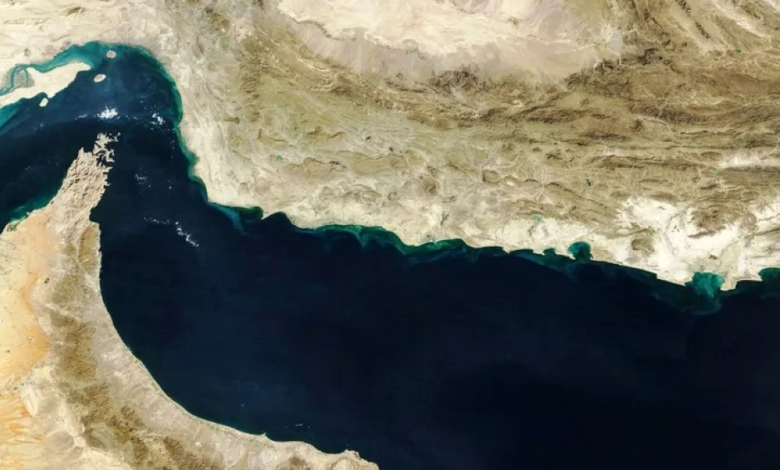
Reports of the closure of the global oil artery
The United Kingdom Maritime Trade Operations (UKMTO) announced it had received reports of the closure of the Strait of Hormuz, the strategic waterway that is vital to global oil markets. The agency stated it is investigating these reports, which have sparked anticipation and concern in international economic and political circles given the strait's critical importance.
The strategic importance of the Strait of Hormuz
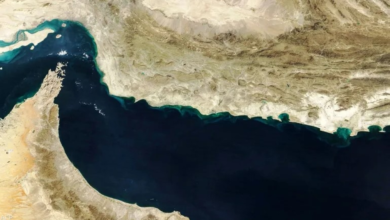
The Strait of Hormuz is one of the world's most important waterways, connecting the Arabian Gulf to the Gulf of Oman, and from there to the Arabian Sea and the Indian Ocean. Approximately one-fifth of the world's oil supply, equivalent to about 21 million barrels, passes through it daily, in addition to vast quantities of liquefied natural gas, particularly from Qatar. Major oil-exporting countries such as Saudi Arabia, Iran, the United Arab Emirates, Kuwait, and Iraq rely heavily on it to transport their exports to global markets, making it a vital chokepoint indispensable to international energy trade.
Historical background of tensions
The Strait of Hormuz has long been a flashpoint for geopolitical tensions in the Middle East. Iran has repeatedly threatened to close the strait as a bargaining chip in response to international sanctions or military threats. The region has witnessed sporadic incidents over the years, including the "Tanker War" during the Iran-Iraq War in the 1980s, and a series of attacks on oil tankers and the seizure of commercial vessels in 2019, which led to an increased international naval presence in the region, led by the United States, to ensure freedom of navigation.
Potential economic and geopolitical impacts
Any disruption to shipping in the Strait of Hormuz, even a short-term one, would send shockwaves through global energy markets. Its closure would likely trigger an immediate and sharp rise in crude oil prices and a significant increase in shipping and marine insurance costs. Internationally, energy consumers and importing nations, particularly in Asia and Europe, would be directly affected. Geopolitically, such an action could be perceived as an act of aggression, potentially escalating regional tensions and even sparking a military confrontation to forcefully reopen the waterway.
Conflicting indicators in the movement of Iranian oil
These reports come as Bloomberg reported that Iran has doubled its oil loadings onto tankers in recent days. Data from the data analytics firm Kpler showed that Iranian oil exports from Kharg Island between February 15 and 20 reached approximately 20.1 million barrels, equivalent to more than 3 million barrels per day. This figure far exceeds Tehran's usual daily export rate, adding another layer of complexity to the current situation.