European concerns over US-Russian negotiations on Ukraine
Amid rapidly evolving geopolitical developments, Kaya Kallas, the EU's foreign policy chief, expressed deep concern about the potential trajectory of diplomatic talks aimed at ending the war in Ukraine. Kallas warned that the anticipated negotiations between US President-elect Donald Trump's envoy, Steve Wittkopf, and Russian President Vladimir Putin could lead to unfair and harsh pressure being exerted on the Ukrainian side, jeopardizing a fragile peace.
In a press statement following a meeting of EU defense ministers in Brussels, Callas stated unequivocally: "I fear that all the pressure will be placed on the weaker party, because Ukraine's surrender is the easiest way to end this war." She indicated that quick fixes that ignore the root causes of the conflict could come at the expense of Ukrainian sovereignty and long-term European security, posing existential challenges to the continent.
Intense diplomatic activity in Paris
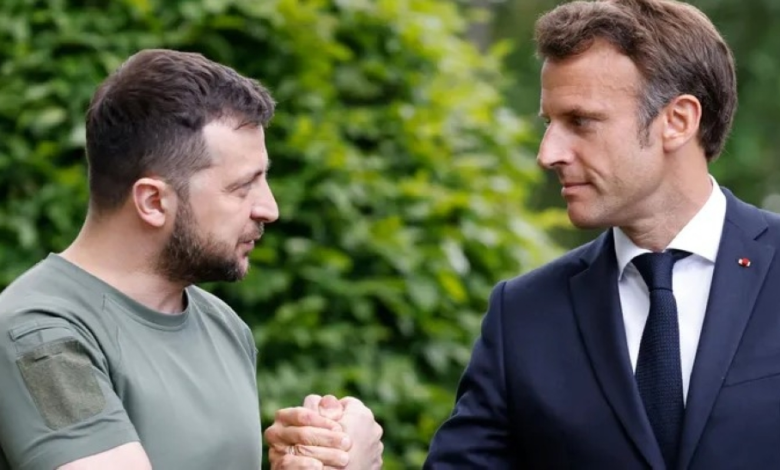
Concurrently with these warnings, Paris witnessed intense diplomatic activity, with the Élysée Palace announcing that French President Emmanuel Macron and his Ukrainian counterpart, Volodymyr Zelensky, held joint talks with Steve Witkov and Ukrainian negotiator Rustam Umarov. This complex coordination aims to align positions before the new US administration officially takes office, amid concerns that Washington might unilaterally make crucial decisions.
As part of expanding the circle of consultation, the French and Ukrainian presidents held a series of telephone calls with prominent European leaders, including British Prime Minister Keir Starmer, and leaders from Germany, Poland, Italy and Norway, as well as leaders of the European Union and NATO, to ensure European unity in the face of possible scenarios.
The historical context and fears of repeating past mistakes
Current European concerns are rooted in a bitter historical context. Countries across the continent, particularly the Baltic and Eastern European states, fear a repeat of past agreements that failed to curb Russian expansion, such as the Minsk agreements. Observers believe that any settlement allowing Russia to retain the territories it seized by force would be a devastating blow to the rules-based international order established after World War II to ensure that borders were not altered by military force.
These developments come at a highly sensitive time, as Western capitals anxiously await the approach of US President-elect Donald Trump, who has repeatedly stated his desire to end the war "within 24 hours." This rhetoric raises concerns among allies that Washington might push for a deal involving territorial concessions to Moscow in exchange for a ceasefire, which Europeans view as rewarding the aggressor and encouraging future military adventures that could extend to other countries in Russia's vicinity.
Strategic implications for European and global security
Strategically, these negotiations are seen as a true test of the cohesion of the Western alliance and the future of NATO. If the United States decides to reduce its military and financial support to Kyiv, Europe will find itself facing a major security dilemma and the challenge of bridging the defense gap, a task that may exceed its current capabilities and require a complete restructuring of the European defense system.
The scenario of “surrender” or forced concessions that Callas warned against not only threatens Ukraine but could also redraw the geopolitical map of global influence. Therefore, European leaders are currently striving to ensure that any future negotiations are based on the principle of “nothing for Ukraine without Ukraine,” to guarantee a just and lasting peace rather than a mere freeze of the conflict that leaves embers smoldering beneath the surface.