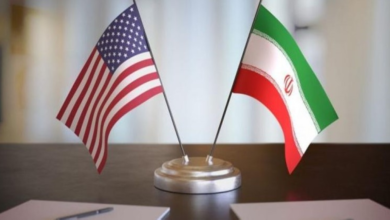
Trump: We want a deal with Iran, but nuclear weapons are a red line
Trump's statements on Iran: between diplomacy and threats
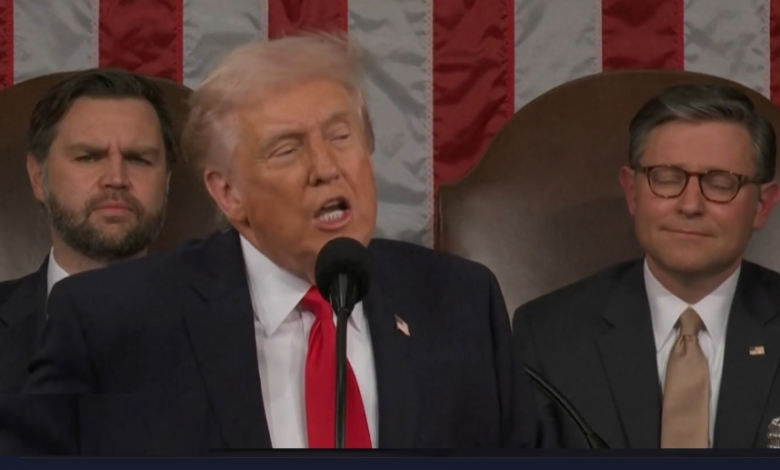
Former US President Donald Trump announced his willingness to reach a new agreement with Iran, but stressed that his administration would not allow Tehran to acquire a nuclear weapon under any circumstances. These remarks were made during his State of the Union address at the Capitol, where he outlined his vision for US foreign and domestic policy.
Trump said, “My preferred option is to resolve the nuclear issue with Iran through diplomacy,” adding, “We have the strongest military in the world, but I hope we don’t have to use it.” This dual message reflects his strategy of demonstrating a willingness to negotiate from a position of strength while simultaneously setting clear red lines. Trump also accused the Iranian regime of developing missiles capable of reaching the United States and threatening its European allies, in addition to holding it responsible for the deaths and injuries of thousands of Americans through its proxies in the region.
Historical background: From the nuclear agreement to the maximum pressure policy
Trump's remarks come within the complex historical context of US-Iranian relations. In 2015, the Obama administration, along with other world powers, signed the Joint Comprehensive Plan of Action (JCPOA), commonly known as the Iran nuclear deal. The agreement aimed to significantly restrict Iran's nuclear program in exchange for lifting economic sanctions. However, Trump was one of the agreement's fiercest critics, describing it as "disastrous.".
In 2018, Trump unilaterally withdrew the United States from the agreement and reimposed harsh economic sanctions on Tehran as part of a policy he called “maximum pressure.” The goal of this policy was to force Iran back to the negotiating table to reach a new, more comprehensive agreement that would address not only its nuclear program but also its missile program and regional policies. Since then, tensions in the region have escalated, while Iran has increased its uranium enrichment levels beyond the limits set by the 2015 agreement.
Importance and potential impacts
Trump's statements carry significant weight both regionally and internationally. Regionally, they have sparked anticipation among Washington's Middle Eastern allies, such as Saudi Arabia and Israel, who share its concerns about Iran's nuclear ambitions. Any new agreement or potential confrontation will fundamentally reshape alliances and balances in the region.
Internationally, European partners, as well as Russia and China, which remain parties to the original agreement, are closely monitoring these developments. The US position directly impacts international efforts to prevent nuclear proliferation and adds a layer of complexity to global diplomacy. Furthermore, any escalation in the Gulf could threaten the stability of global energy markets.
Other issues in Trump's speech
Trump's speech was not limited to the Iranian issue; he also addressed other international and domestic matters. Regarding the conflict in Gaza, he highlighted his administration's efforts to reach a ceasefire agreement and secure the release of hostages. He also emphasized his commitment to working diligently to end the war in Ukraine. Domestically, Trump focused on issues such as illegal immigration, inflation, and fuel prices, asserting that his administration had successfully secured the borders, reduced inflation, and achieved U.S. energy independence.