Trump: Iran nuclear negotiations disappointing and unsatisfactory
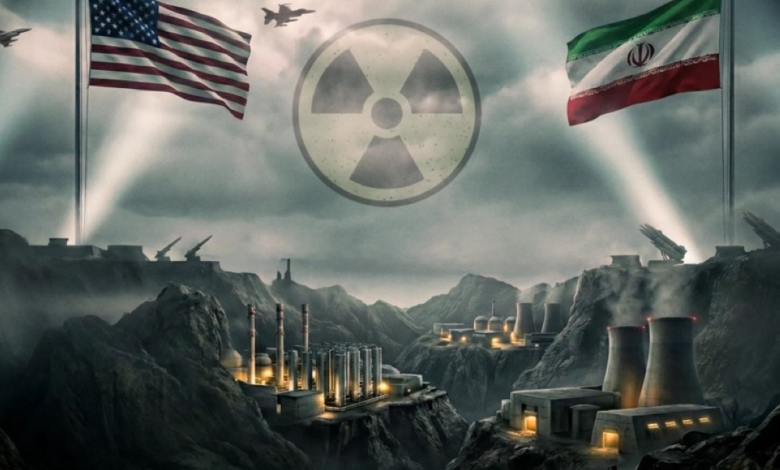
Former US President Donald Trump expressed his complete dissatisfaction with the course of negotiations with Iran, describing the situation as "very unfortunate." In remarks to reporters, Trump emphasized that Tehran "is not prepared to give us what we should be getting," reiterating the firm US position that "they cannot have a nuclear weapon.".
Trump indicated that his administration has not yet made a final decision regarding potential military strikes against Iran, amid escalating tensions in the region. He added, “We are not entirely happy with the way they are negotiating. It’s very unfortunate.” These remarks reflect the stalemate in relations between Washington and Tehran during his presidency, which saw the United States withdraw from the nuclear agreement.
Historical background: From the nuclear agreement to the maximum pressure policy
The roots of the current tensions can be traced back to 2015, when Iran and the P5+1 group of world powers—comprising the United States, Russia, China, France, Britain, and Germany—reached the Joint Comprehensive Plan of Action (JCPOA), commonly known as the Iran nuclear deal. Under this agreement, Iran agreed to significantly restrict its nuclear program and open its facilities to intensive international inspections in exchange for the lifting of economic sanctions.
But in May 2018, President Donald Trump unilaterally withdrew the United States from the agreement, calling it “the worst deal ever,” arguing that it failed to address Iran’s ballistic missile program or its destabilizing activities in the Middle East. Following the withdrawal, his administration reimposed harsh economic sanctions on Tehran and adopted a policy of “maximum pressure” aimed at forcing Iran back to the negotiating table to reach a new, more comprehensive agreement.
Regional and international importance and impacts
The US withdrawal from the nuclear agreement and the reimposition of sanctions had far-reaching consequences. Domestically, in Iran, the sanctions led to a sharp decline in the Iranian economy, a collapse in the value of the local currency, and soaring inflation and unemployment rates, directly impacting the lives of citizens. In response, Iran began gradually reducing its compliance with the nuclear agreement, increasing its uranium enrichment levels.
Regionally, the escalation between Washington and Tehran has heightened tensions in the Middle East, particularly in the Arabian Gulf and the strategic Strait of Hormuz. The region has witnessed attacks on oil tankers and energy facilities, raising fears of a direct military confrontation that could draw in other regional actors.
On the international level, the American stance created a rift with European allies who were parties to the agreement and had strived to preserve it. Despite their attempts to establish mechanisms to circumvent the American sanctions, their powerful impact prevented these efforts from succeeding, thus posing a significant challenge to the international system based on multilateral agreements.