Trump closes Venezuelan airspace in preparation for imminent ground operations
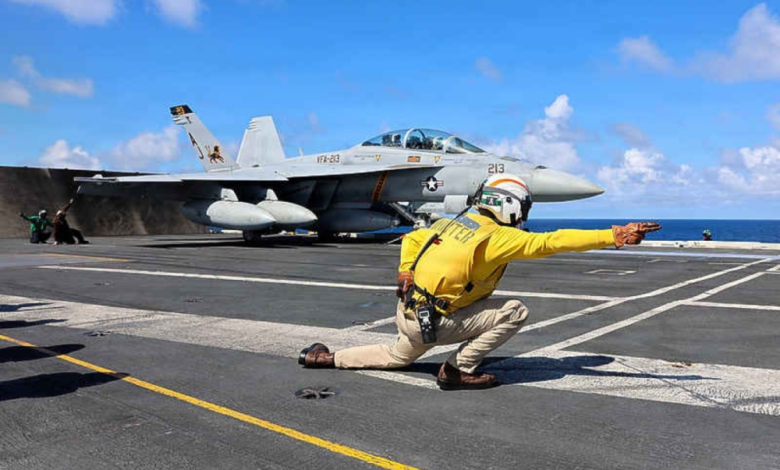
In a dramatic development that threatens a major military escalation in Latin America, US President Donald Trump today announced a complete closure of the airspace over Venezuela and its surrounding region. This bold decision comes as a prelude to what he described as an imminent "ground operation," according to CNN, putting the entire region on high alert.
Advertisement details and strict warnings
This announcement came via the Truth Social platform, where Trump delivered a strongly worded and direct message to multiple parties. The US president stated in his post: “To all airlines, pilots, drug traffickers, and human traffickers, please consider closing the airspace over and around Venezuela.” This warning is not limited to civilian aviation; it also carries a direct threat to organized crime networks that use Venezuelan airspace as a transit route.
This decision comes just two days after Trump's earlier statements confirming that "ground operations" in Venezuela would begin "very soon." The president justified these actions as part of a new and decisive package of measures aimed at dismantling drug trafficking networks that threaten US national security, signaling a shift in US strategy from economic sanctions to direct intervention.
A deteriorating security situation and advance warnings
This announcement was not entirely unexpected by military observers, as it had been preceded by official warnings. Last week, the US Federal Aviation Administration (FAA) issued a warning to major airlines about a “potentially dangerous situation” when flying over Venezuelan airspace. The FAA attributed this to “a deteriorating security situation and increased military activity in or around the country,” reflecting the presence of pre-existing military preparations on the ground.
Background to the conflict: From sanctions to military posturing
To understand the implications of this decision, one must consider the historical context of strained relations between Washington and Caracas. The United States has long accused the Venezuelan government of colluding with drug cartels, and the U.S. Department of Justice has previously indicted senior Venezuelan officials on charges of “narco-terrorism.” Washington views Venezuela as a major transit point for cocaine destined for the United States, making military intervention—from the U.S. administration’s perspective—a matter of national security, not merely foreign policy.
Expected regional and international repercussions
This air blockade and the threat of a ground invasion carry serious repercussions at both the regional and international levels. Regionally, this move could trigger a new wave of displacement and further complicate the humanitarian crisis in Venezuela, as well as provoke neighboring countries that might be affected by military operations. Internationally, this decision is expected to elicit angry reactions from Venezuela's traditional allies, such as Russia and China, which have economic and strategic interests in the country, potentially transforming the Venezuelan crisis into a wider geopolitical arena for conflict between major powers.