Thailand and Cambodia ceasefire agreement: full details
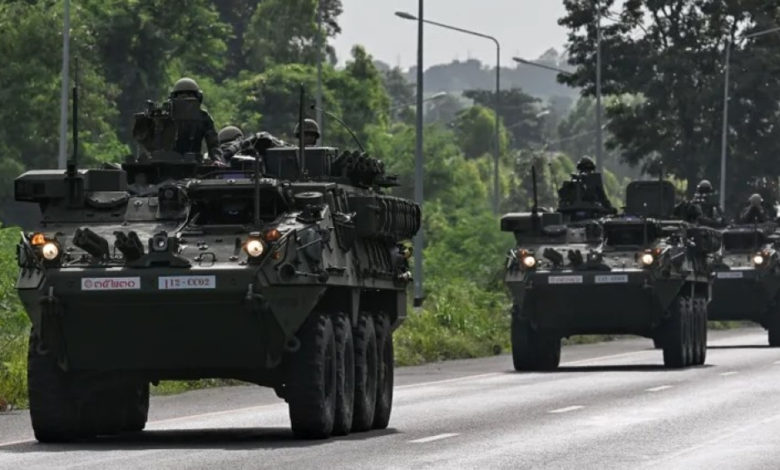
Thailand and Cambodia announced a crucial step toward ending a weeks-long border conflict, pledging an immediate and comprehensive ceasefire. The announcement, made in a joint statement released Saturday, vowed to end the clashes that have left dozens dead and triggered a massive humanitarian displacement crisis.
Details of the agreement and military clauses
According to the statement signed by the two countries' defense ministers at a border crossing on the Thai side, the ceasefire officially came into effect at 12:00 noon (05:00 GMT) on December 27, 2025. The agreement explicitly states:
- An immediate cessation of all military operations using all types of weapons.
- Attacks on civilians, infrastructure, and military targets are prohibited in all areas.
- Freezing the movements of military forces on both sides of the border.
- Joint cooperation in mine clearance and combating cybercrime.
- Thailand to return 18 captured Cambodian soldiers within 72 hours.
Thai Defense Minister Nataphon Narakvanit stated that the first three days would serve as a crucial "monitoring period" to test the seriousness of the commitment to the truce, describing the agreement as "a gateway to a peaceful solution.".
Human losses and the field context
The past three weeks have witnessed a dangerous military escalation, with official figures revealing that at least 47 people have been killed. The conflict has spread to almost all border provinces, employing a diverse arsenal including heavy artillery, tanks, fighter jets, and drones. This excessive violence has led to the collapse of a previous ceasefire that US President Donald Trump had taken credit for brokering.
Human dimensions and historical roots of the conflict
This truce is of paramount importance given the devastating human cost of the conflict; reports indicate that more than a million people have been displaced from their homes in border areas. This agreement offers these civilians renewed hope of returning home, with both sides emphasizing their commitment to facilitating their return as quickly as possible.
Historically, the Thai-Cambodian border has been highly geopolitically sensitive, with intermittent conflicts occurring over decades, often centered on border demarcation and sovereignty over archaeological sites and historical temples. This latest escalation in 2025 was one of the most violent in recent years, raising regional concerns about the destabilization of Southeast Asia and its impact on the ASEAN economic bloc.
International reactions welcoming
The agreement was widely welcomed internationally. UN Secretary-General António Guterres expressed his support for the move, describing it as essential to "alleviating the suffering of civilians and creating an environment conducive to lasting peace." The High Commissioner for Human Rights, Volker Türk, also stressed the need to use the truce to build trust and ensure aid reaches those affected. For its part, the European Union called on both parties to adhere to the terms of the agreement in good faith to ensure lasting stability in the region.