Storm Marta hits Spain and Portugal; flood warnings issued
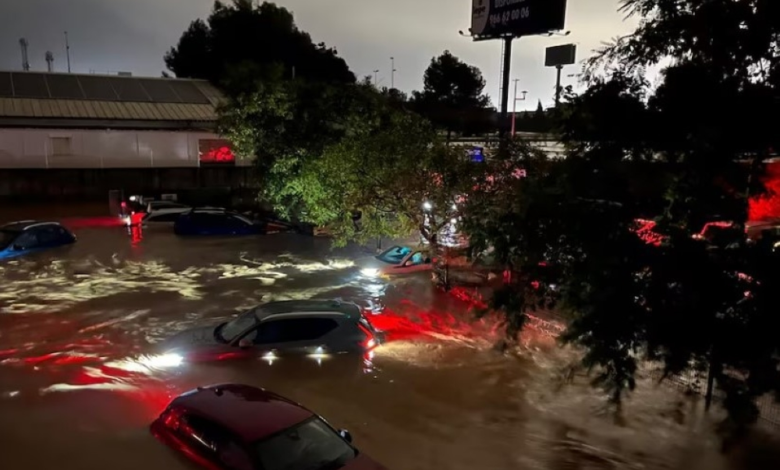
The Iberian Peninsula had barely recovered from the devastating effects of Storm Leonardo when Spain and Portugal found themselves facing a new and even harsher weather challenge with the arrival of Storm Marta. This new storm brought with it torrential rains and strong winds whose effects were not limited to the two European countries but extended to Morocco as well, putting the entire region to a real test of its infrastructure's resilience.
Cumulative impact and risks of soil saturation
The danger of Storm Marta stems primarily from its critical timing; it is hitting the region while the soil is still thoroughly saturated with rainwater from the previous storm. Meteorologists and geologists warn that the ground's capacity to absorb more water is almost nonexistent, significantly increasing the likelihood of flash floods and landslides, especially in mountainous areas and on slopes.
In this context, authorities in both countries are on high alert, with "orange" warnings in place across wide areas, including southern Spain, specifically the Andalusia region, as well as the northwestern regions. Officials fear a repeat of the loss of life, especially after the previous storm claimed two lives in Spain.
Infrastructure paralysis and evacuation of thousands
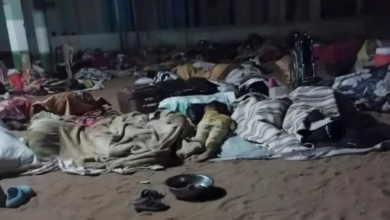
The severe weather has severely disrupted daily life and transportation. Authorities have announced widespread suspensions of train services and the closure of several major roads as a precautionary measure to ensure public safety. In Andalusia, one of the hardest-hit regions, emergency teams have been forced to evacuate more than 10,000 people from their homes after they were surrounded by floodwaters or their buildings were at risk of collapse.
Spanish Prime Minister Pedro Sánchez described the situation as "shocking" after inspecting the damage, predicting difficult days ahead that will require national unity to overcome the crisis. These statements reflect the immense pressure on state institutions in dealing with the successive natural disasters.
Portugal: Elections under the shadow of the storm
Across the border, Portugal faces an equally dire situation, as Storm Marta coincided with the second round of the presidential election, further complicating the logistical landscape. The country is also experiencing record rainfall, with January being the second wettest month since 2000.
Portuguese authorities were forced to open dam gates to release excess water, with the head of the Portuguese Environment Agency announcing that the dams had released in just three days an amount of water equivalent to the country's entire annual consumption. The coastline was also placed on high alert due to waves that could reach 13 meters, threatening coastal areas and ports.
Climate context and Mediterranean changes
Scientists link the increasing frequency of these extreme weather events to global climate change, particularly in the Mediterranean basin and the Iberian Peninsula. After years of severe heat waves and droughts, the region is now experiencing what is known as "climate extremes," with weather patterns shifting rapidly from severe droughts to devastating floods, posing new challenges to future urban planning strategies and water resource management.