Spain: 39 dead in train collision in Andalusia; details of the disaster
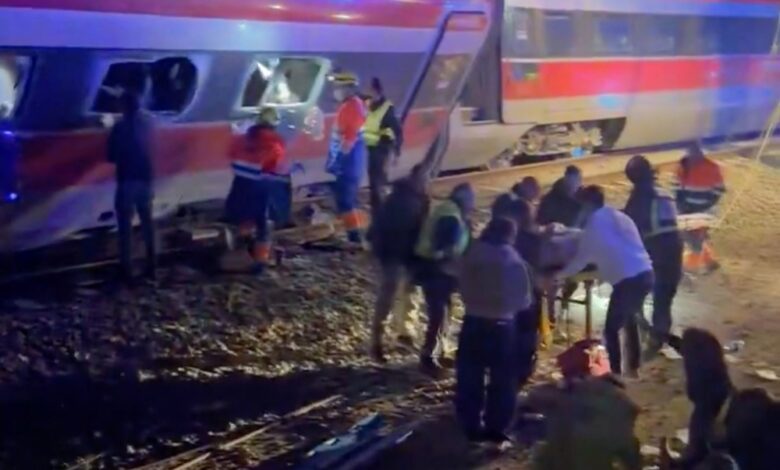
Spain has suffered one of the worst rail disasters in its modern history, with the Interior Ministry announcing Monday morning that the death toll from the high-speed train collision that occurred Sunday evening in the southern region of Andalusia has risen. Official sources confirmed to AFP that the number of fatalities has climbed to at least 39, up from initial estimates of 24.
Details of the bloody night in Andalusia
The tragic accident occurred at 7:45 PM local time, approximately 200 kilometers north of Malaga. According to initial investigations, the disaster began when a train belonging to the private company Iryo, traveling from Malaga to Madrid, suddenly derailed. This derailment resulted in a violent collision with a train belonging to the national company Renfe, which was traveling in the opposite direction on the adjacent track towards Huelva.
Spanish Transport Minister Oscar Puente described the scene as horrific, noting that “the violence of the collision was so severe that it derailed the first two carriages of the Renfe train,” causing widespread destruction to the front carriages of both trains.
Medical and military mobilization to rescue victims
The accident resulted in injuries to approximately 123 people, with five in critical condition and 24 others in serious condition. Authorities called in the Spanish Army's military emergency unit to support civilian ambulance crews. A field hospital was set up near the accident site to triage the injured and provide initial treatment before transferring them to hospitals in Córdoba and Andújar for further medical care.
Context of the incident and its significance for the European transport sector
This incident comes at a time when Spain is experiencing a major expansion of its high-speed rail network (AVE), which is the second longest in the world after China. Spain recently opened its railway market to competition, allowing private companies like Aereo to operate alongside the state-owned operator Renfe.
This incident raises serious questions about safety protocols in place, especially given the increased traffic on major lines like the Madrid-Andalusia line. While Spanish railways generally enjoy a strong safety record, this accident brings back painful memories of past incidents, placing significant pressure on the Spanish government and European safety authorities to conduct thorough investigations to ensure such disasters, which affect not only the local level but also raise concerns across the entire European transport sector, are not repeated.