Citrus production in Saudi Arabia reaches 158,000 tons in winter
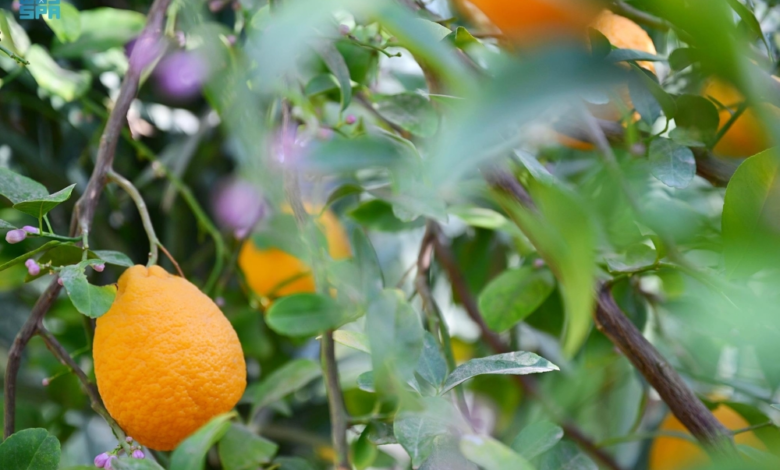
The Saudi Ministry of Environment, Water and Agriculture announced promising figures for the agricultural sector, confirming a bountiful citrus during the current winter season across the Kingdom. This announcement underscores the success of seasonal agricultural plans, as winter is considered one of the most important seasons for local agricultural production due to the mild and cool climatic conditions that directly contribute to improving crop quality and increasing production efficiency.
Record numbers and crop diversity
In detail, the Ministry revealed, as part of its "Our Healthy Winter" awareness campaign in its second edition, that total citrus production exceeded 158,000 tons Lemons topped the list of produced fruits with a quantity exceeding 123,000 tons, followed by oranges with a production of 35,700 tons. Production was not limited to these two varieties alone, but also included a diverse range of citrus fruits such as citron, tangerines, grapefruit, and kumquats, reflecting the agricultural richness of the Kingdom's lands and their ability to meet a significant portion of the local market's needs.
Strategic context and food security
This figure is not merely a passing statistic, but rather the fruit of long-term strategic efforts adopted by the Kingdom within the framework of Vision 2030. Since the launch of the National Agricultural Strategy, the Ministry has worked to support farmers in adopting modern agricultural technologies and water-efficient irrigation systems, which has contributed to increasing the cultivated area in regions such as Najran, Qassim, Riyadh, and Madinah. This well-planned expansion primarily aims to enhance food security , reduce the import bill, and achieve high levels of self-sufficiency in strategic crops.
Health and environmental benefits of local consumption
The ministry noted that the increased consumption of locally grown citrus fruits has significant health and environmental implications. From a health perspective, citrus fruits are a primary source of Vitamin C and antioxidants, essential for boosting immunity during the winter months. Environmentally, relying on local produce reduces the carbon footprint associated with shipping and transportation within long supply chains linked to imports, while also supporting the circular economy for local farmers.
Citrus Festival in Al-Hariq: A Marketing Window
In a related development supporting this sector, the Al-Hariq Governorate in the Riyadh region is currently hosting the 10th Citrus Festival . This prominent annual event brings together farmers, investors, and consumers, aiming to market national products, empower farmers to develop their technical skills, and promote agricultural tourism, which has become a significant economic driver for Saudi governorates.