Saudi Arabia weather: Tabuk and Sakaka record 5 degrees, rain in several regions
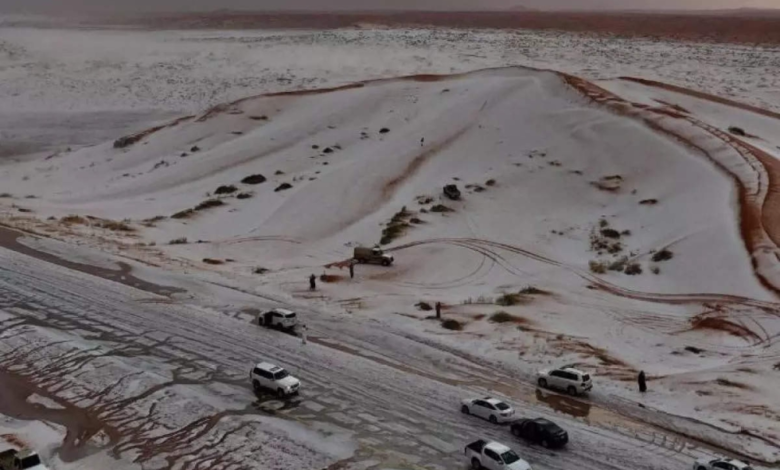
Northern regions of Saudi Arabia experienced a significant drop in temperatures on Sunday morning, with the cities of Sakaka and Tabuk recording the lowest temperatures at 5 degrees Celsius. This decrease is part of the cold waves beginning to affect the Kingdom as winter deepens.
According to data issued by the National Center for Meteorology, Tabuk and Sakaka were not the only areas experiencing this drop, as the governorates of Rafha and Arar recorded 7 degrees Celsius, while the temperature reached 8 degrees in both the Hail and Qassim regions, indicating a significant decrease in minimum temperatures in the northern and central regions.
Details of the weather conditions and associated phenomena
The National Center for Meteorology's weather forecast for today indicates not only cold temperatures but also active surface winds that will stir up dust and sand. These winds are expected to directly affect parts of the Tabuk, Al-Jawf, and Northern Borders regions, potentially reducing horizontal visibility to near zero in open areas and on highways, with a chance of scattered light rain in those areas.
In a related context, the chance of thunderstorms accompanied by active winds continues across wide areas including Jazan, Asir, Al-Baha, and Makkah, extending to parts of Riyadh and the Eastern Province. The center also warned of the possibility of fog formation during the night and early morning hours in the highlands and parts of Hail, Qassim, and Madinah regions, urging caution.
Winter climate in the north of the Kingdom: a geographical context
The northern regions of Saudi Arabia, specifically Tabuk, Al-Jawf, and the Northern Borders, possess a unique climate that makes them the primary gateway for cold air masses arriving from the north, the Levant, and Europe. Historically, these areas are known for recording the lowest temperatures in the Kingdom during winter, with temperatures sometimes dropping below freezing and snowfall occurring, particularly in the highlands of Jabal Al-Lawz and Al-Aqan in Tabuk.
This typical climatic pattern reflects the geographical nature of these regions, which are elevated above sea level and located at higher latitudes compared to the rest of the Kingdom, making them more affected by polar air depressions.
The importance of warnings and the impact of weather on public safety
These weather reports are of paramount importance, both locally and in terms of public services. From a traffic perspective, the combination of dust in the north and fog and rain in the central and southern regions presents significant challenges for those traveling on the highways connecting the Kingdom's far-flung areas. Authorities such as Civil Defense and Highway Patrol consistently urge citizens and residents to adhere to speed limits and maintain safe following distances in such volatile weather conditions.
Furthermore, the sudden drop in temperatures, especially in the early morning hours that coincide with students going to school and employees going to work, requires taking health precautions to avoid seasonal winter illnesses and colds, by wearing appropriate winter clothing and avoiding direct exposure to cold air currents.