Traffic authorities warn against crossing valleys during rainfall: Safety tips
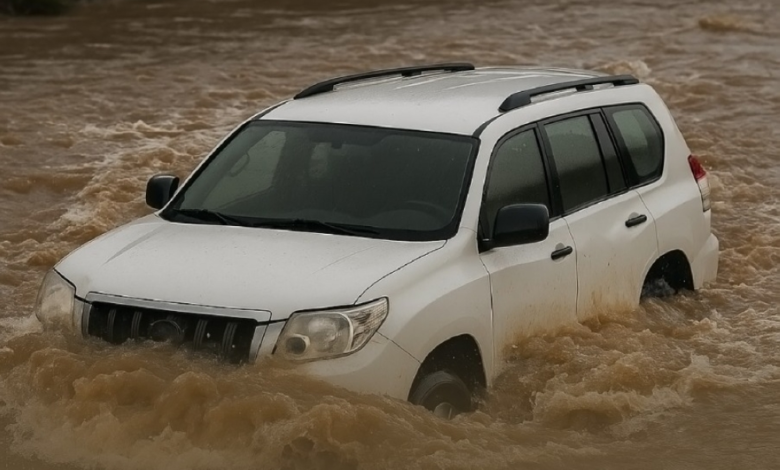
The General Directorate of Traffic in Saudi Arabia has renewed its warnings to drivers about the serious dangers of crossing valleys and ravines during rainfall and flash floods. This warning comes in conjunction with the rainy weather affecting several regions of the Kingdom, and is aimed at protecting lives and property from the tragic accidents that occur annually due to negligence in following safety instructions.
Geographical context and the danger of flash floods
The Kingdom of Saudi Arabia is characterized by a geography rich in valleys and ravines, which are often dry throughout the year. However, they transform rapidly into raging torrents of water during heavy rainfall. The greatest danger lies in flash floods, where the weather may be clear at the vehicle's location, while a torrent of water, resulting from rain in distant areas, suddenly sweeps through the valley, trapping drivers in mere seconds. Historically, the Kingdom has recorded numerous drowning and swept-away incidents resulting from attempts to cross these valleys in ill-equipped vehicles or even four-wheel-drive vehicles that cannot withstand the force of the rushing water.
Why should crossing valleys be avoided?
The official Saudi Traffic account explained via the “X” platform that risking crossing valleys while they are flowing exposes the driver and passengers to real dangers, which it summarized in the following points:
- Vehicle slippage and loss of control: Running water and sticky mud at the bottom of the valley result in no friction between the tires and the ground, making steering the vehicle impossible.
- Sudden engine stall: A rise in water level often causes water to enter the engine's combustion chamber or electrical system, causing the vehicle to stall in the middle of the raging torrent.
- The difficulty of rescue operations: Being in the middle of a raging valley complicates the tasks of the civil defense teams, and may endanger the lives of the rescuers themselves due to the speed of the water currents and the instability of the ground.
- Threat to passenger safety: The ultimate result of this adventure is to put the lives of everyone on the vehicle at risk of drowning or serious injury.
The legal dimension and its impact on public safety
It is worth noting that the relevant authorities in the Kingdom have not only raised awareness but have also enacted strict laws to deter reckless drivers. Crossing wadis and ravines while they are flowing is considered a serious traffic violation punishable by a fine of up to 10,000 Saudi Riyals. This measure aims to reduce the strain on state resources in rescue operations and to protect lives. It reflects the utmost importance the state places on traffic safety and mitigating natural disasters resulting from human error.
Reasons for vehicle swerving on wet roads
In a related context regarding safe driving during rainy weather, the Traffic Department pointed out that accidents are not limited to valleys, but also extend to highways and internal roads. The department identified six main causes that lead to vehicles veering suddenly:
- Driving at speeds exceeding the permitted limits reduces reaction time.
- Worn-out vehicle tires or improper air pressure, which reduces their grip on wet roads.
- Heavy rainfall that obscures visibility and increases road slippage.
- Neglecting the comprehensive periodic inspection of the vehicle may conceal mechanical defects that appear during crises.
- Being distracted from driving by using a phone or other means is the primary cause of accidents.
- Sudden changes in lanes without the use of warning lights.