Red Crescent: 56-second response time at the Prophet's Mosque during Ramadan
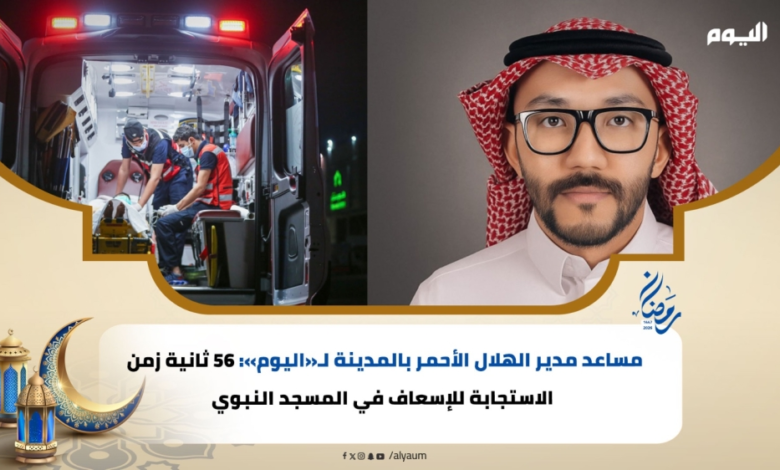
A record response time enhances the safety of visitors to the Prophet's Mosque
Omar Hashim Niaz, Assistant Director General of the Saudi Red Crescent Authority's Madinah branch for ambulance operations, confirmed that the Authority achieved a record response time of just 56 seconds for emergency cases within the Prophet's Mosque during the holy month of Ramadan. This achievement is part of a comprehensive system of services aimed at protecting lives and enhancing the safety of millions of visitors and pilgrims who flock to the city of the Prophet Muhammad (peace be upon him).
In a private interview, Niaz explained that the operational plan for the Ramadan season focused primarily on reducing response time to the lowest possible level, through the proactive deployment of ambulance teams at strategic points within the Holy Mosque, its courtyards, and the surrounding central areas, which witness high human density around the clock.
General context and importance of the event
Emergency services in Medina are of paramount importance due to its religious significance as one of the holiest cities in Islam and its reception of millions of pilgrims and visitors annually. This importance is amplified during peak seasons such as Ramadan and Hajj, when population density reaches its maximum, presenting a significant logistical challenge that demands the highest levels of preparedness and planning. These efforts fall under the objectives of the "Guests of God Service Program," one of the programs of Saudi Vision 2030, which aims to enrich and enhance the Hajj and Umrah experience and provide all means of comfort and safety for pilgrims.
Local and international impact reflects the efficiency of the health system
Achieving this record-breaking response time not only enhances the sense of security among visitors and citizens locally, but also resonates internationally. It reflects to the Islamic world and the international community the scale of investment and effort that the Kingdom of Saudi Arabia dedicates to harnessing human and technological resources to serve the Two Holy Mosques and their visitors. It also highlights the efficiency of trained Saudi personnel and the capability of the healthcare system to handle emergencies in the most challenging and crowded environments, further solidifying the Kingdom's reputation as a safe and reliable destination for Muslims worldwide.
Details of the operational plan and human resources
The plan is based on a meticulous analysis of crowd movement and population density, dividing Medina into 10 ambulance sectors to ensure comprehensive coverage. It includes the operation of 97 ambulance units staffed by over 474 qualified paramedics, supported by a contingent of more than 1,500 volunteers during Ramadan. Niaz highlighted the vital role of rapid response teams, equipped with medical motorcycles and golf carts, which possess the maneuverability and rapid accessibility to patients in congested areas that are difficult for traditional ambulances to reach quickly.
A final word to the guests of God
Niaz concluded his remarks by addressing visitors to Medina, emphasizing that their safety is the Authority's top priority and that ambulance teams are on standby around the clock to serve them. He urged everyone to adhere to health and safety guidelines and not to hesitate to seek medical assistance when needed by calling the unified number (997) or through the field teams deployed throughout the city.