Peace Winds 2026 Maneuvers: Saudi-Omani Missile Fire Exercise
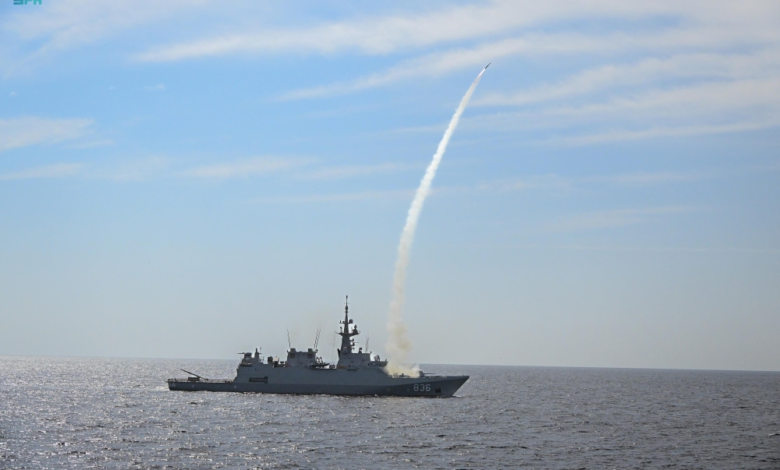
In a move reflecting the depth of military and strategic cooperation among the Gulf Cooperation Council (GCC) states, the Royal Saudi Naval Forces and their counterparts, the Royal Navy of Oman, conducted a live-fire missile and ammunition exercise as a key component of the joint naval exercise “Winds of Peace 2026.” The exercise is taking place in the territorial waters of the Sultanate of Oman, with high-level participation including the Chief of Staff of the Royal Saudi Naval Forces, Vice Admiral Mohammed bin Abdulrahman Al-Gharibi, and the Commander of the Royal Navy of Oman, Rear Admiral Saif bin Nasser Al-Rahbi.
Details of the maneuvers and combat capabilities
The exercise featured the practical application of several complex operational scenarios simulating modern naval warfare. This iteration was distinguished by its broad participation, including 10 advanced warships, supported by helicopters for reconnaissance and air attack missions, as well as the involvement of two platoons from the naval special forces. The training focused on mechanisms for protecting maritime shipping lanes, intercepting hostile targets, and enhancing maritime security measures to ensure safe navigation in the region.
Strategic importance and regional context
The “Winds of Peace” exercises are of paramount strategic importance given the vital geographical location of both the Kingdom of Saudi Arabia and the Sultanate of Oman. The two countries overlook some of the world’s most important waterways, including the Strait of Hormuz and the Arabian Sea, which are crucial arteries for global energy supplies and trade. This exercise aims to enhance the readiness of the two countries’ naval forces to address any potential threats that could affect regional security or disrupt international maritime traffic.
A history of joint military cooperation
The “Winds of Peace” exercise is not an isolated event, but rather an extension of a series of joint exercises and defense agreements linking Riyadh and Muscat under the umbrella of the Gulf Cooperation Council. These ongoing drills aim to unify military concepts, enhance operational coordination among participating units, and exchange combat and technical expertise. The exercise also reflects the commitment of the military leadership in both countries to developing a joint defense system that achieves regional security, prosperity, and stability amidst the evolving challenges of the international arena.
In conclusion, the participating forces demonstrated a high level of professionalism and accuracy in hitting targets, confirming the high combat readiness of the Royal Saudi Naval Forces and the Royal Omani Navy in protecting common interests and territorial waters.