Launch of the Advanced Knowledge Laboratory for Mineral Resources in Saudi Arabia
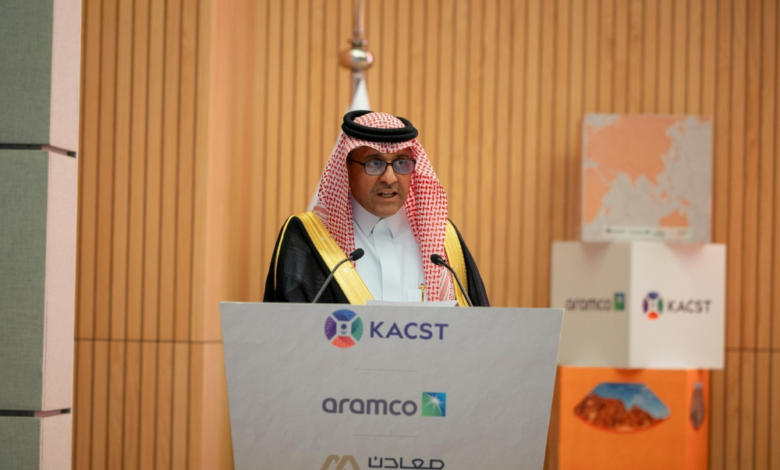
In a strategic move reflecting the Kingdom of Saudi Arabia’s commitment to developing its industrial and economic sectors, the President of King Abdulaziz City for Science and Technology (KACST), Dr. Munir bin Mahmoud Al-Dasouqi, inaugurated the “Advanced Knowledge Laboratory for Mineral Resources.” This launch represents a new cornerstone in the Kingdom’s efforts to enhance geological innovation and support advanced exploration operations, in line with the objectives of Vision 2030, which positions the mining sector as the third pillar of national industry.
Context of the event: Mining is a third pillar of the economy
The announcement of the laboratory came during the 19th International Lithosphere Programme Forum, organized by KAUST in collaboration with the United Nations International Lithosphere Programme (ILP). This move comes at a time when the Kingdom is undergoing a historic transformation in its approach to mineral resources, as it seeks to exploit the untapped resources in the Arabian Shield, estimated to be worth trillions of riyals. This laboratory represents a scientific and technological response to the urgent need to localize advanced technology capable of detecting these resources with high accuracy and efficiency.
Advanced technologies for exploring the Earth's interior
The new laboratory primarily aims to localize advanced geophysical modeling technologies. The importance of these technologies lies in their ability to enhance the efficiency of mineral exploration, enabling a deeper and more accurate understanding of the Earth's subsurface. The laboratory's role will not be limited to traditional applications; it will also work on developing modern geophysical surveying techniques that directly contribute to reducing the risks of mining investments and accelerating exploration processes—a crucial factor in attracting foreign and domestic investment to this vital sector.
Strategic importance and meeting global demand
During the inauguration ceremony, attended by the Deputy Minister of Industry and Mineral Resources for Mining Affairs, Engineer Khalid bin Saleh Al-Mudaifer, it was emphasized that global demand for minerals is witnessing unprecedented acceleration, driven by the global shift towards clean energy and technology industries. Al-Mudaifer noted that the Kingdom has placed geology at the heart of its strategy, citing the completion of a geological survey covering more than 700,000 square kilometers of the Arabian Shield. This massive survey provides a vast database that the new laboratory will analyze and utilize to its fullest potential, thus strengthening the Kingdom's position as a reliable partner in global mineral supply chains.
Innovation and support for clean energy
For his part, Dr. Talal bin Ahmed Al-Sudairy, Senior Vice President of Research and Development at KAUST, explained that the Kingdom's possession of one of the world's most important mineral regions gives it a significant competitive advantage. He emphasized that the shift towards clean energy technologies, such as electric vehicles and energy storage technologies, is dramatically increasing demand for specific minerals. This underscores the crucial role of investment in lithospheric science in ensuring resource security and sustainability.
KAUST is leading this scientific movement as a national laboratory for innovation research in the mining sector and an incubator for the Innovation Oasis and mining technology accelerators. The city works in close partnership with the Ministry of Industry and Mineral Resources to connect national and regional centers of excellence, with the aim of exchanging expertise in the fields of artificial intelligence and numerical modeling.
Global scientific dialogue on the lithosphere
The forum included in-depth dialogue sessions that discussed the nature of the lithosphere in the Arab region and the mineral system of the Arabian and Nubian Shield. Experts also addressed geological heritage and its role in supporting sustainable tourism, reviewing the latest developments in lithosphere dynamics, the uses of artificial intelligence, and remote sensing technologies in exploring hydrocarbon and mineral resources, thus confirming the Kingdom's leading role in guiding scientific dialogue in this field regionally and internationally.