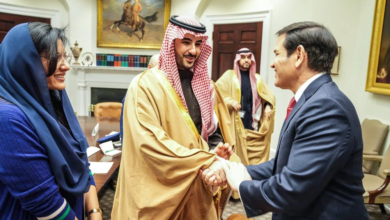
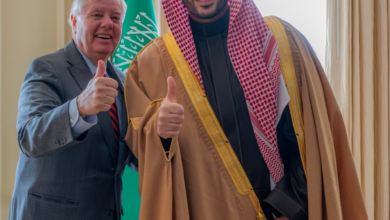
The truth about Saudi Arabia's refusal to receive Tahnoon bin Zayed: Minister of Information clarifies
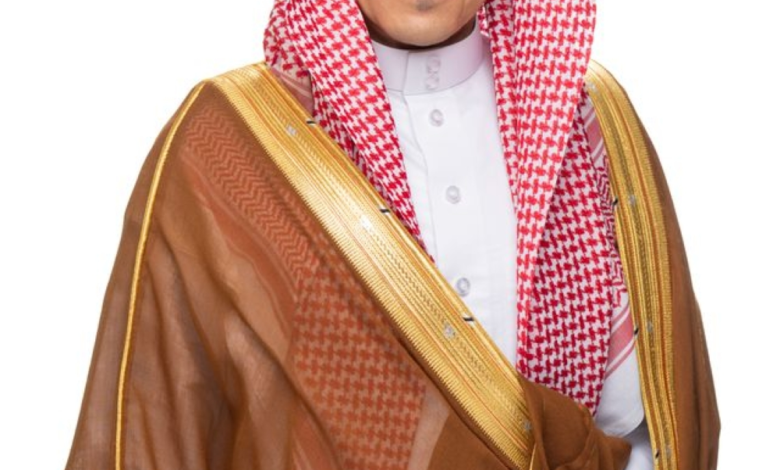
The Saudi Minister of Information categorically denied the veracity of recent reports and rumors circulating on some social media platforms, which claimed that the Kingdom of Saudi Arabia had refused to receive the National Security Advisor of the United Arab Emirates, Sheikh Tahnoon bin Zayed Al Nahyan. The Minister affirmed that this information is completely false and has no basis in reality, emphasizing the importance of obtaining information from official and reliable sources.
The depth of Saudi-Emirati relations
These malicious rumors come at a time when relations between Riyadh and Abu Dhabi are at their peak. The Kingdom of Saudi Arabia and the United Arab Emirates share deep-rooted historical and strategic ties that transcend traditional cooperation, evolving into a comprehensive partnership and integration across various fields. These relations are founded on a long legacy of brotherhood and a shared destiny that unites the leadership and people of the two sister nations, making them impervious to attempts to sow discord or create division.
The Saudi-Emirati Coordination Council: A Model of Integration
In response to these claims, it is essential to reiterate the pivotal role of the Saudi-Emirati Coordination Council, which serves as the institutional framework for relations between the two countries. The Council works to ensure the implementation of a shared vision aimed at enhancing the standing of both nations in the areas of economics, human development, and political and military security integration. This cooperation has yielded dozens of strategic initiatives that benefit the citizens of both countries and strengthen the Gulf Cooperation Council as a unified bloc.
The regional and international importance of reciprocal visits
The exchange of visits between officials of the two countries, including those of Sheikh Tahnoon bin Zayed, is of paramount importance given the weight of both nations on the regional and international stages. Saudi Arabia and the UAE represent the two pillars of stability in the Middle East, and their ongoing coordination on sensitive issues—whether related to energy security, combating terrorism, or resolving regional conflicts—is a cornerstone of Arab national security. Any talk of tension or refusal to receive high-level delegations contradicts political logic and the reality of the continuous daily coordination between the two capitals.
Countering rumors in the digital age
Observers noted that the circulation of such rumors is often intended to sow confusion in media and political circles. The Ministry of Information called on everyone to exercise accuracy and credibility, and not to be swayed by anonymous accounts that promote fabricated news aimed at undermining the strength of Gulf relations. The Kingdom always affirms that its doors are open to its brothers, and that its relations with the United Arab Emirates in particular serve as a model to be emulated in Arab international relations.