Russian General Fanil Sarfarov killed in Moscow explosion
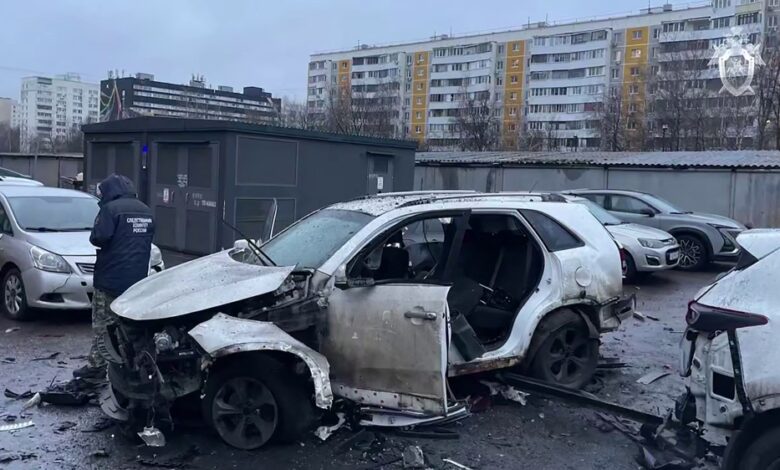
In a significant security development reflecting escalating tensions within Russia, a high-ranking general in the Russian General Staff was killed Monday morning by a car bomb in southern Moscow. The Russian Investigative Committee quickly announced the incident, directly implicating Ukrainian intelligence in the assassination, thus opening a new chapter in the campaign of targeted killings and assassinations that parallels the ongoing battles on the ground.
Details of the incident and initial investigations
The Russian Investigative Committee stated in an official statement that the victim was General Fanil Sarfarov , head of the operational training department of the General Staff. According to the statement, the general died from severe injuries sustained when an improvised explosive device (IED) planted under his car detonated on Iasenieva Street in southern Moscow. Security authorities immediately launched a comprehensive criminal investigation under the charges of "murder" and "illegal transport of explosives," asserting that the strongest hypothesis currently being pursued is the involvement of Ukrainian intelligence in planning and executing this sophisticated attack.
Penetrating Russia's security depth
This incident once again highlights the security challenges facing Russia far beyond the front lines. The fact that operations reached the heart of Moscow and targeted high-ranking military figures indicates security vulnerabilities and the enemy's ability to carry out sophisticated operations in supposedly heavily controlled areas. This type of operation carries implications that extend beyond human casualties, reaching the psychological and morale-boosting impact on Russia's military and political leadership, demonstrating that war is no longer confined to the geographical boundaries of traditional battles.
A series of systematic assassinations
The killing of General Sarfarov is not an isolated incident, but rather part of a series of attacks targeting prominent Russian figures since the start of the military operation in Ukraine in February 2022. Moscow has repeatedly accused Kyiv of being behind these operations, which have targeted pro-Kremlin military and civilian officials
- August 2022: Daria Dugin, daughter of philosopher Alexander Dugin, was killed in a car bombing in the suburbs of Moscow, in an incident that shocked Russian public opinion.
- April 2023: The assassination of the famous military blogger Maxim Fomin (known as Vladlin Tatarsky) by a booby-trapped statue explosion inside a cafe in St. Petersburg.
- April 2024: General Yaroslav Moskalik, Deputy Chief of the Main Operations Directorate of the General Staff, was killed in a car bombing near Moscow.
- December 2024: The assassination of Igor Kirillov, commander of the Radiation and Chemical Defense Troops, by an electric bicycle explosion, an operation explicitly claimed by the Ukrainian Security Service.
The repercussions of the intelligence conflict
The recurrence of these incidents indicates that the conflict between Russia and Ukraine has transformed into a fierce "shadow war" waged by intelligence agencies. While Kyiv sometimes officially denies responsibility for certain attacks, claiming responsibility for others, or even hinting at it, is part of a psychological warfare campaign. This incident is expected to lead to heightened security measures in major Russian cities and may prompt Moscow to retaliate against decision-making centers in Kyiv, further complicating an already tense military and political landscape.