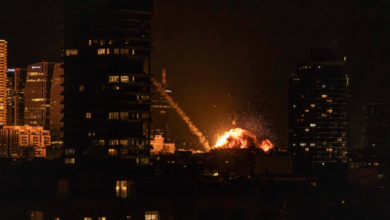
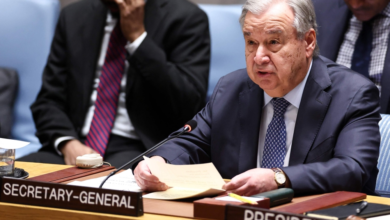
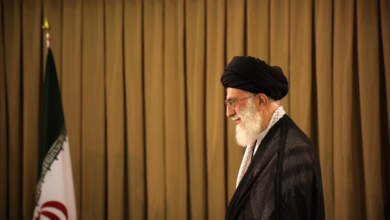
The Crown Prince and the German Chancellor discuss Iranian escalation and regional security
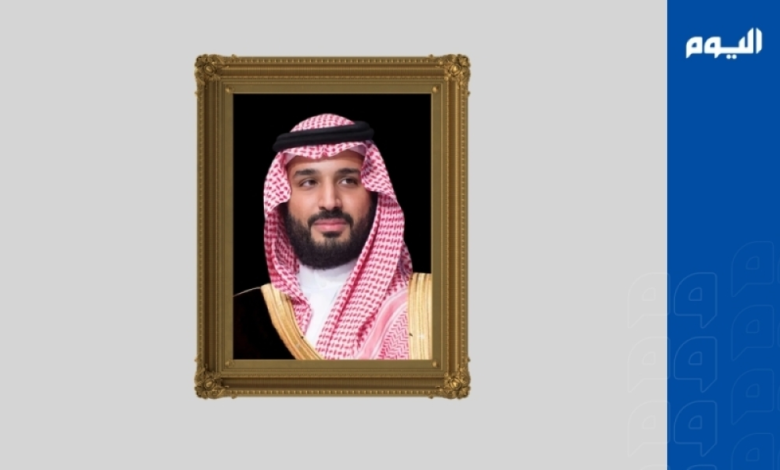
Amid escalating tensions in the Middle East, His Royal Highness Prince Mohammed bin Salman bin Abdulaziz Al Saud, Crown Prince and Prime Minister, held a telephone conversation with the Chancellor of the Federal Republic of Germany, Olaf Scholz. The call addressed the latest regional developments, with particular focus on the recent military escalation and its threat to international peace and security.
During the talks, the two sides reviewed the repercussions of the blatant Iranian attacks targeting the Kingdom and other brotherly countries in the region, and stressed the importance of concerted international efforts to contain the situation and prevent it from escalating into a wider confrontation. His Royal Highness the Crown Prince and the German Chancellor emphasized the need for all parties to exercise maximum restraint and to work through diplomatic channels to de-escalate tensions.
Historical context of regional tension
This contact comes within the complex historical context of regional rivalry between Saudi Arabia and Iran, which has spanned decades and encompassed multiple arenas across the Middle East. Recent years have witnessed repeated attacks attributed to Iran and its proxies, such as the 2019 attacks on Aramco oil facilities in Abqaiq and Khurais, which temporarily disrupted global energy supplies. Iranian support for the Houthi movement in Yemen also poses a constant threat to the Kingdom's security through ballistic missile and drone attacks. These events have contributed to instability, making current diplomatic efforts more urgent than ever.
The importance of international action and its expected impact
These Saudi-German talks are of paramount importance on several levels. Domestically , they reflect the Kingdom's commitment to ensuring its national stability, protecting its vital infrastructure—indispensable to the global economy—and guaranteeing that its ambitious development plans, embodied in Vision 2030, remain unaffected by any regional conflicts. Regionally , the coordination between Riyadh and Berlin sends a clear message about the necessity of avoiding a full-scale war that could devastate the region's economies and threaten international navigation in vital waterways such as the Strait of Hormuz and the Bab el-Mandeb Strait. Internationally , Germany, as a major economic and political power within the European Union, plays a pivotal role in forging a unified international stance that calls for dialogue and de-escalation, and emphasizes the importance of respecting state sovereignty and international law, thus serving the interests of all in maintaining the stability of energy markets and global security.