National Afforestation Program: A plan to revive 40 million hectares

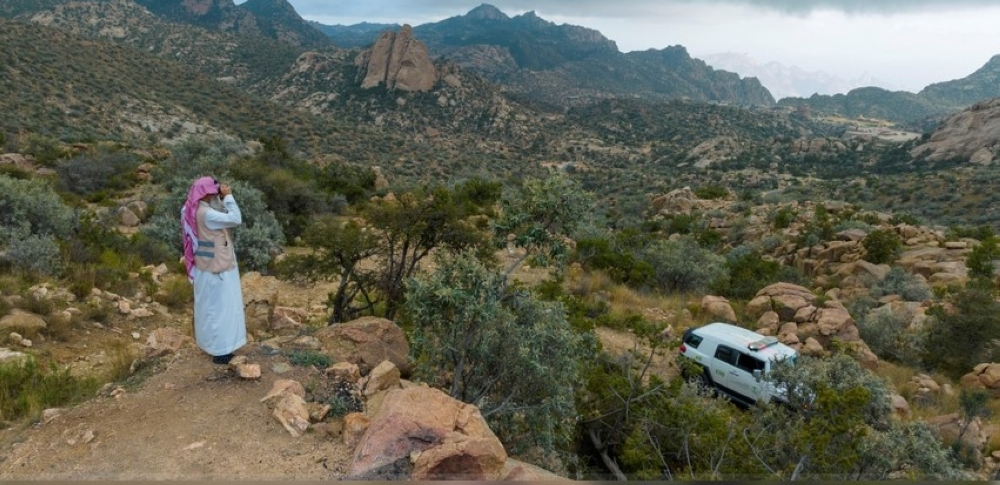
The National Afforestation Program affirmed that meticulous field monitoring of the ecosystem and continuous on-site verification are essential for the success of degraded land rehabilitation plans in Saudi Arabia. This step is a pivotal component in contributing to the objectives of the "Saudi Green Initiative," which aims to rehabilitate 40 million hectares of land, equivalent to planting 10 billion trees across the Kingdom, with the goal of restoring natural vegetation cover and combating desertification.
Strategic partnership with FAO to ensure quality
These assurances came during a specialized national workshop on "Field Verification in Land Rehabilitation," organized by the program in close collaboration with the Food and Agriculture Organization of the United Nations (FAO). The workshop saw broad participation from experts, specialists, and stakeholders, and addressed current challenges and discussed strategic opportunities for developing land reclamation mechanisms according to best international practices.
Context of the initiative and its objectives within Vision 2030
These efforts are particularly significant given the Kingdom’s historical and environmental context. In 2021, His Royal Highness Crown Prince Mohammed bin Salman launched the Saudi Green Initiative, an ambitious vision aimed at protecting the land and nature. The initiative works to reduce carbon emissions, combat pollution and land degradation, and preserve marine life. The project to plant 10 billion trees is one of the world’s largest reforestation projects, reflecting the Kingdom’s unwavering commitment to leading the green era in the region and supporting international efforts to address climate change.
Investing in the green economy
In this context, the CEO of the National Center for Vegetation Development and Combating Desertification, Engineer Ahmed Al-Ayadah, explained that the process of assessing and rehabilitating degraded lands is not limited to the environmental dimension alone, but is a strategic investment in the Kingdom's future. He pointed out that this approach supports the "green economy" and improves the quality of life, in line with the objectives of the Kingdom's Vision 2030. Al-Ayadah emphasized that the integration of precise scientific assessment and sound field implementation, supported by institutional support, will enable the Kingdom to consolidate its global leadership in the field of ecosystem restoration and ensure the highest environmental and economic return on investments directed to this vital sector.
A scientific methodology for achieving sustainability
Engineer Al-Ayadah added that the main objective of intensifying ecosystem monitoring and field verification is to increase the success rates of rehabilitation projects and direct resources and efforts toward the highest priority sites. This methodology also aims to select appropriate environmental interventions for each level of degradation, ensuring the long-term sustainability of results and protecting natural resources for future generations. The outcomes of this workshop will serve as a local and international reference for a globally recognized scientific methodology in the field of field verification.
For its part, the FAO renewed its commitment to expanding its work with the National Afforestation Program to include all program sites, thus ensuring the documentation and appreciation of the Kingdom’s efforts in managing afforestation projects, and recognizing it as a leading global model in the field of sustainable development.