Saudi Arabia approves 2026 budget with spending of 1.3 trillion riyals
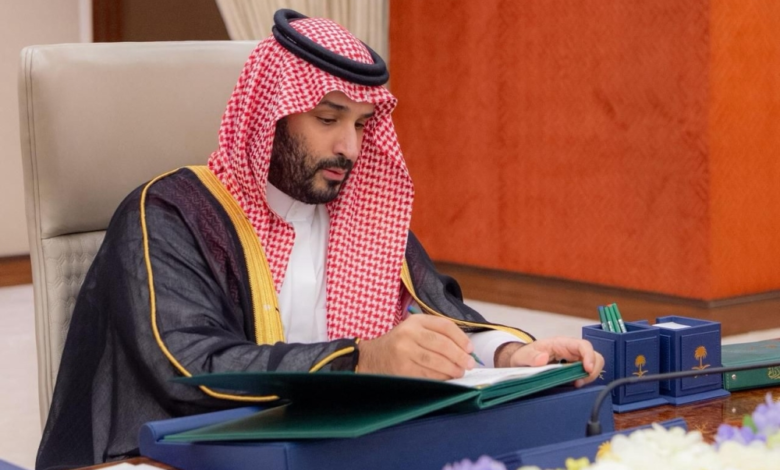
His Royal Highness Prince Mohammed bin Salman bin Abdulaziz Al Saud, Crown Prince, Prime Minister and Chairman of the Council of Economic and Development Affairs - may God protect him - chaired the session held by the Council of Ministers today, Tuesday, 11 Jumada al-Akhirah 1447 AH, corresponding to December 2, 2025 AD, in the city of Dammam, which was dedicated to approving the state’s general budget for the next fiscal year 1447/1448 AH (2026 AD).
During the session, the Council reviewed the detailed items of the general budget, and issued its decision to approve the state’s public expenditures in the amount of (1,312,800,000,000) one thousand three hundred and twelve billion eight hundred million riyals, while the public revenues were estimated in the amount of (1,147,400,000,000) one thousand one hundred and forty-seven billion four hundred million riyals, so that the expected deficit was estimated in the amount of (165,400,000,000) one hundred and sixty-five billion four hundred million riyals.
The approval of the 2026 budget comes at a crucial time, reflecting the Kingdom of Saudi Arabia's continued commitment to its ambitious development approach. This budget represents an important link in the series of economic and financial reforms launched with the Kingdom's Vision 2030. The announced figures confirm the government's commitment to strategic spending directed towards major projects, infrastructure development, and enhancing the quality of life, while maintaining financial sustainability in the medium and long term.
In line with these directives, His Royal Highness the Crown Prince, may God protect him, instructed ministers and officials, each within their respective areas of responsibility, to actively commit to and meticulously implement the developmental and social programs and projects included in the budget. His Highness emphasized the necessity for these allocations to contribute directly to achieving the objectives of the Kingdom's Vision 2030, placing the service of citizens and the fulfillment of their needs at the forefront of government priorities, thus ensuring the continued improvement of services provided in the education, health, housing, and municipal sectors.
This budget carries significant economic implications both domestically and regionally. The high level of government spending reflects the state's desire to stimulate the non-oil economy and support the private sector as a key partner in development. Furthermore, continued spending on mega-projects enhances the Kingdom's attractiveness to foreign investment and supports the creation of more job opportunities for citizens, thus contributing to lower unemployment rates and higher economic growth.
Despite the budget deficit, economic experts view it as a planned and controlled shortfall, designed to avoid disrupting the Kingdom's rapid development. The Kingdom enjoys a strong financial position and substantial government reserves, enabling it to manage this deficit efficiently, whether through debt markets or controlled withdrawals from reserves. This underscores the resilience of the Saudi economy and its ability to adapt to global economic changes.