Saudi Arabia weather today: Temperatures in Riyadh, Dammam, and Jeddah
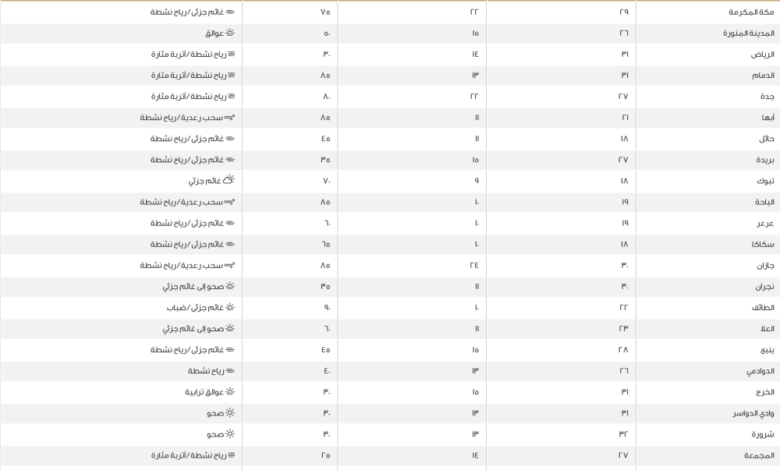
The National Center for Meteorology in Saudi Arabia issued its daily weather report, revealing a noticeable variation in maximum temperatures recorded on Tuesday across the Kingdom's cities and provinces. Dammam and the capital, Riyadh, both recorded 31 degrees Celsius, while Al-Ahsa and Rawdat Tanhat recorded the highest temperatures at 33 degrees Celsius, reflecting generally mild weather tending towards warmth in some eastern and central regions.
Details of maximum temperatures in the Kingdom's major cities:
- Eastern Province: Dammam 31, Al-Ahsa 33, Hafr Al-Batin 29 degrees Celsius.
- Central region: Riyadh 31, Buraidah 27, Al-Kharj 31 degrees Celsius.
- Western Region: Makkah 29, Jeddah 27, Madinah 26, Taif 22 degrees Celsius.
- Southern region: Abha 21, Jazan 30, Najran 30, Al-Baha 19 degrees Celsius.
- Northern region: Tabuk 18, Hail 18, Arar 19, Sakaka 18, Tarif 15 degrees Celsius.
The Kingdom's climatic context and its impact
This temperature variation reflects the diverse geographical and climatic nature of Saudi Arabia. While the coastal areas along the Arabian Gulf and the Red Sea enjoy relatively warmer and more humid weather during this time of year, the southwestern highlands, such as Abha and Al-Baha, experience cooler and more temperate conditions. In contrast, the northern and desert regions begin to register lower temperatures, especially at night, signaling the approach of winter. This diversity makes it essential for residents to follow the National Center of Meteorology's reports to plan their daily activities.
The importance of monitoring the weather and its impact on vital sectors
The importance of these reports extends beyond individuals to encompass multiple vital sectors. The agricultural sector relies directly on weather forecasts to determine planting and harvesting times and the most suitable crop varieties. The energy sector is also significantly affected, as electricity consumption increases with rising temperatures due to the use of air conditioning. In the health sector, weather warnings and alerts contribute to raising awareness among citizens and residents, especially the elderly and children, enabling them to take necessary precautions against seasonal illnesses or heatstroke in hot climates. Weather forecasts also play a pivotal role in the transportation and tourism sectors, contributing to road safety and the smooth operation of air and sea navigation, and helping tourists better plan their trips.