Today's maximum temperatures in Saudi Arabia: Dammam 22 and Mecca 31
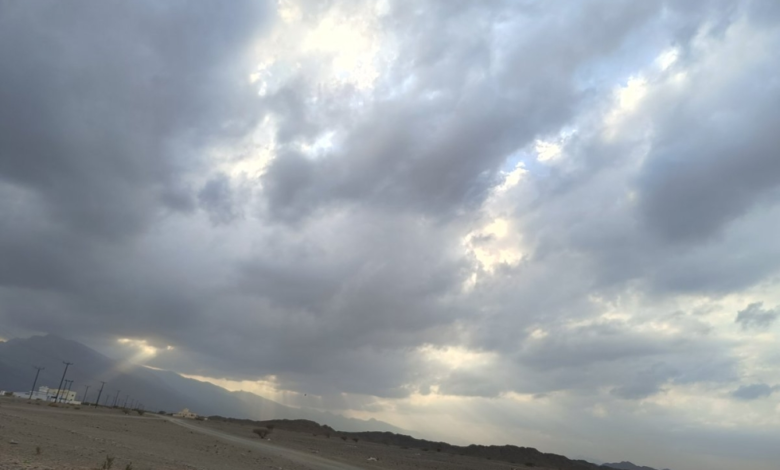
The National Center for Meteorology in Saudi Arabia released its daily report on maximum temperatures recorded on Wednesday, revealing significant climatic variations across the Kingdom's regions, reflecting the country's diverse geography and climate. The city of Dammam in the Eastern Province recorded a maximum temperature of 22 degrees Celsius, a moderate temperature tending towards cool and suitable for the pleasant winter weather the region experiences at this time of year.
Temperature details in major cities
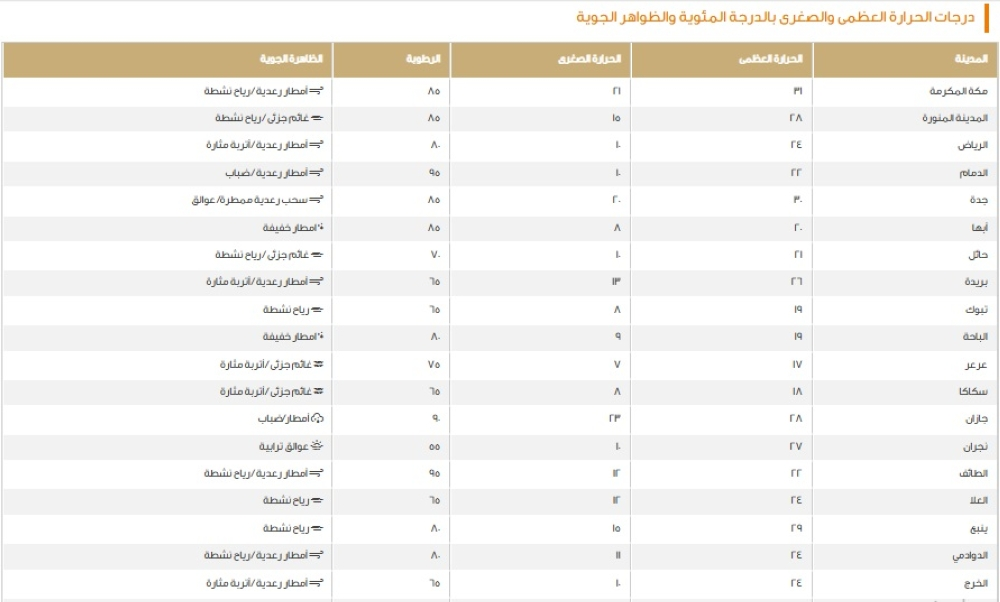
The meteorological report indicated that Mecca topped the list of warmest cities, recording a high of 31 degrees Celsius, followed by Jeddah and Al-Qunfudhah at 30 degrees Celsius, suggesting continued relatively warm weather along the western coast of the Red Sea. In contrast, the northern regions experienced a noticeable drop in temperatures, with Tarif recording the lowest high at only 14 degrees Celsius, followed by Al-Qurayyat at 16 degrees Celsius and Arar at 17 degrees Celsius, urging residents of these areas to prepare winter clothing.
The following is a detailed statement of the maximum temperatures recorded:
- Central and Eastern Region: Riyadh (24), Dammam (22), Al-Ahsa (23), Al-Kharj (24), Al-Majma’ah (24), Hafr Al-Batin (25).
- Western and coastal region: Makkah (31), Madinah (28), Jeddah (30), Yanbu (29), Taif (22).
- Northern regions: Tabuk (19), Hail (21), Al-Jawf/Sakaka (18), Tarif (14), Al-Qurayyat (16), Rafha (19).
- Southern regions and highlands: Abha (20), Al-Baha (19), Jazan (28), Najran (27), Bisha (29), Al-Soudah (15).
An analytical reading of the climate situation
This report reflects the continental climate of the Kingdom, where temperature differences are clearly evident between the humid and warm coastal areas such as Jeddah and Jazan, and the dry and cold interior and northern regions. While residents of Mecca and Jeddah enjoy warm, spring-like weather, those in the southern highlands, such as As-Soudah (15°C) and Al-Baha (19°C), experience cold weather requiring heating. This underscores the importance of monitoring weather reports daily to plan outdoor activities and choose appropriate clothing.
The importance of the National Center for Meteorology's reports
The data issued by the National Center for Meteorology is a cornerstone of public safety and daily planning for citizens and residents. The importance of these reports extends beyond simply knowing the temperature; it includes alerts about other weather phenomena that may accompany these temperatures, such as surface wind activity that could stir up dust and sand in open areas like highways in the Eastern and Central regions, or the possibility of rainfall in the southern highlands such as Asir. This contributes to raising awareness and preparedness among everyone.