A severe cold wave in northern Saudi Arabia: Temperatures will reach near zero next week
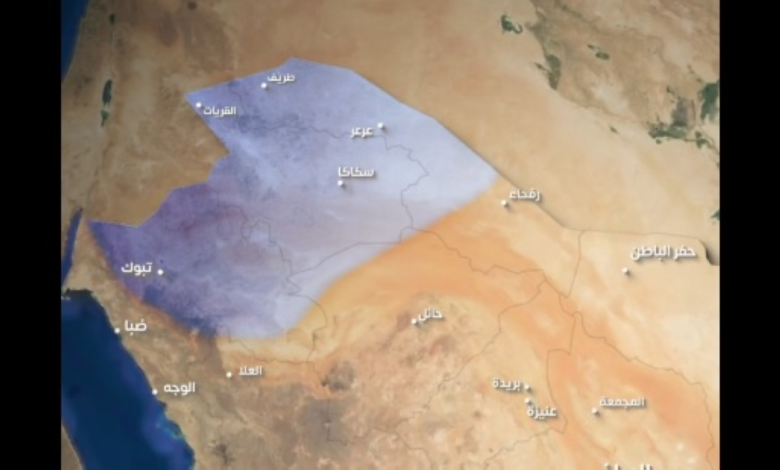
The National Center for Meteorology has announced its forecast of a strong cold wave and a sharp, noticeable drop in temperatures across large parts of northern and northwestern Saudi Arabia, starting this coming Saturday and Sunday. The forecast indicates that temperatures may reach freezing in some areas, necessitating caution and preparation for the cold winter weather.
Areas most affected by the decline
The center explained in its report that the cold wave will primarily affect three northern regions: Tabuk, Al-Jawf, and the Northern Borders region. Weather stations in these areas are expected to record a sharp drop in minimum temperatures, ranging between 3 degrees Celsius and reaching zero degrees Celsius, especially during the late night and early morning hours. The center urged citizens and residents in these regions to take the necessary precautions to cope with the extremely cold weather and to wear heavy winter clothing.
The climatic context of winter in the north of the Kingdom
Cold waves are a defining characteristic of winter in the northern regions of Saudi Arabia, which are characterized by their continental desert climate. These areas are directly affected by cold air masses originating from Central Asia and Eastern Europe, leading to a significant drop in temperatures and sometimes frost and snowfall on mountain peaks such as Jabal al-Lawz in Tabuk. This period of the year is known locally as "al-Murabba'aniyah" and "al-Shabṭ," periods marked by intense cold that impacts all aspects of life.
Expected impacts and the importance of preparedness
The impact of these cold waves isn't limited to the daily lives of residents; it extends to other vital sectors. In agriculture, frost poses a significant threat to exposed crops, requiring farmers to take precautionary measures to protect their produce. From a health perspective, authorities are warning the elderly, children, and those with chronic illnesses to avoid direct exposure to the cold to prevent health problems. On the other hand, this cold weather, sometimes accompanied by snow, attracts local tourists and weather enthusiasts, boosting domestic winter tourism in these areas, which are becoming a unique destination for enjoying the rare winter landscapes of the Arabian Peninsula.