New Year's riots in Germany: deaths and hundreds arrested
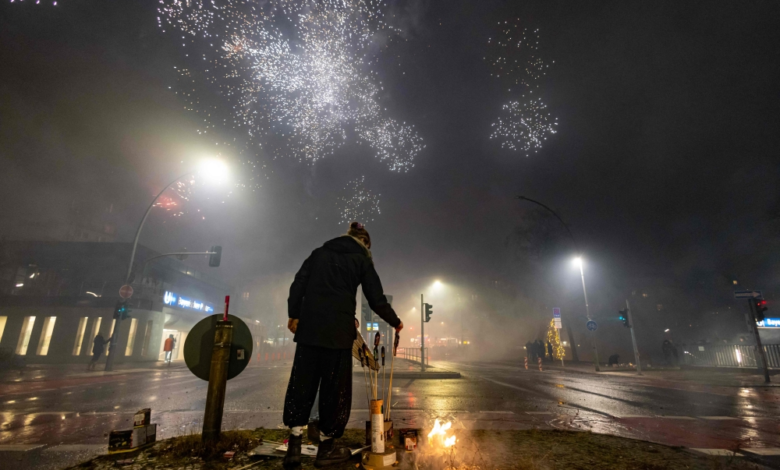
Germany witnessed tragic events and widespread security disturbances on New Year's Eve, turning the festive atmosphere in several major cities into battlegrounds, resulting in the death of two people and the injury of dozens, in addition to a widespread arrest campaign that affected hundreds.
A tense night in Berlin and Hamburg
Berlin experienced an exceptionally tense night as traditional celebrations turned into riots directly targeting state symbols. Police sources in Berlin confirmed the arrest of approximately 430 suspects following coordinated and random attacks on security forces and firefighters. These clashes resulted in injuries to 35 police officers, some of whom required hospitalization.
Hamburg was not spared from this chaos, with authorities reporting similar incidents that resulted in injuries to 10 police officers, amid reports that an unspecified number were under investigation or in preventative detention. Authorities had anticipated this night by deploying massive security reinforcements, including an additional 3,200 officers in Berlin and approximately 1,000 in Hamburg, based on risk assessments and lessons learned from past years that saw escalating violence.
Fireworks tragedies and urgent medical interventions
In a tragic incident that overshadowed the celebrations, police in Bielefeld (western Germany) announced the deaths of two 18-year-old boys. Initial investigations revealed that the victims died from the indiscriminate use of homemade firecrackers, which caused fatal facial injuries that proved fatal.
On the medical front, Berlin's accident hospital received more than 30 critical cases related to the use of fireworks. Hospital spokesperson Angela Kiewski stated that medical staff encountered horrific injuries requiring amputations of fingers or parts of the hands, as well as treating severe burns and serious eye and facial injuries, highlighting the dangerous nature of the materials used.
Context of escalating violence against authorities
These events reinforce growing concerns in Germany about violence against state officials and rescue workers. In North Rhine-Westphalia, the most populous state, police recorded 30 direct attacks on their officers during 4,000 security operations in a single night. In Leipzig, forces faced organized mass attacks by groups of vandals who used stones, paint-filled bottles, and firecrackers as weapons.
This escalation is not a spontaneous occurrence, but rather an extension of a worrying phenomenon that Germany has witnessed in recent years, where New Year's celebrations have become an excuse for some extremist or anarchist groups to attack law enforcement institutions, thus opening the door wide to political and societal discussions about the need to tighten penalties.
Repercussions and demands for accountability
These disturbances sparked widespread outrage, with the German police union calling for swift and decisive legal action. Andreas Roskov, a union representative, described the attacks as "serious assaults on the rule of law," demanding that those responsible be brought to justice quickly as a deterrent to others. These events are expected to reignite the political debate surrounding banning the sale of fireworks to individuals or expanding restricted areas, in an effort to control this recurring security breach that threatens public safety annually.