Russia rejects the deployment of multinational peacekeeping forces in Ukraine
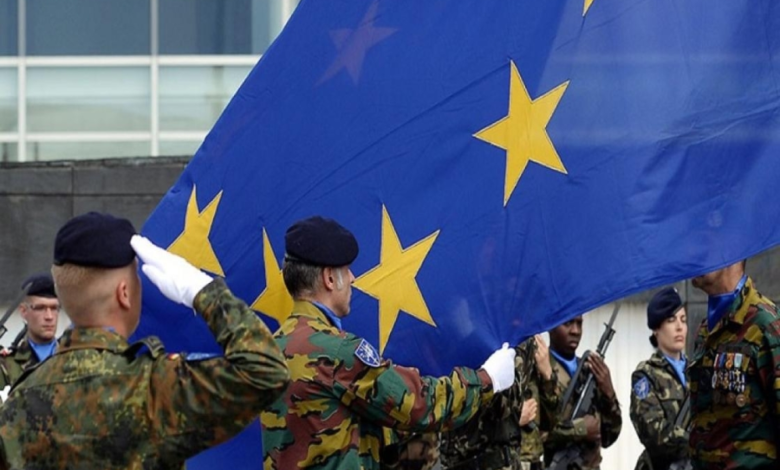
Russian Foreign Minister Sergey Lavrov a scathing attack on Friday against European proposals to form a multinational force to oversee any future peace agreement in Ukraine. Speaking during a visit to the Egyptian capital, Cairo, Lavrov described the Western initiative as a "brazen" threat to Russian national security, rather than a mere security measure to maintain stability.
Details of the Russian rejection and stance towards the West
In his remarks, Lavrov asserted that Moscow does not view these actions as peace efforts, but rather as a blatant attempt to transform Ukrainian territory into a forward operating base for threatening the Russian Federation militarily and strategically. The Russian minister stated, "This is not so much about security as it is another... brazen attempt... to prepare Ukrainian territory as a platform for threatening Russia." This statement reflects the Russian military doctrine, which considers any Western (NATO) military presence on its borders a red line that cannot be crossed.
Background of the European proposal and the international context
These statements come at a time when leaders of countries allied with Kyiv, including Britain, France, Germany, and Italy, have indicated their readiness to discuss deploying a "multinational force" in Ukraine. According to the European perspective, this force aims to:
- Assistance in rebuilding and rehabilitating Ukrainian forces.
- Ensuring the security of Ukrainian airspace against air attacks.
- Securing safe zones for civilians and carrying out logistical operations deep inside Ukraine.
This debate stems from a broader context that began with the outbreak of war in February 2022, when NATO countries sought to support Ukraine without directly engaging in combat to avoid a third world war. However, the idea of a "peacekeeping force" or European security force is reminiscent of previous statements by French President Emmanuel Macron regarding the possibility of deploying Western troops, a proposal that was met then, and is now again, with staunch Russian rejection.
The implications of this move on the course of war and peace
Moscow has repeatedly warned that any Western forces setting foot on Ukrainian soil will be considered "legitimate targets" for the Russian military, raising the risk of direct escalation between Russia and NATO. Observers believe that the West's insistence on tangible security guarantees on the ground, coupled with Russia's insistence on Ukraine's complete neutrality, makes reaching a mutually acceptable ceasefire agreement extremely difficult at this stage.
Analysts point out that Lavrov's statements from Cairo carry a dual message: the first to the West that Russia will not accept the imposition of a new military reality on its borders, and the second to the countries of the Global South that the conflict is a geopolitical power struggle and not just a border dispute.