Russia controls Myronograd and Goliopol; Kyiv suffers power outage
In a significant development on the eastern front, the Russian Ministry of Defense and the Kremlin announced on Saturday that they had taken full control of the towns of Miranograd (known in Russia as Dimitrov) in the Donetsk region and Goliopol, located in the eastern part of the Zaporizhzhia region. This announcement reflects the accelerated pace of Russian military operations on key battlefronts, particularly in the Donbas region, which has been a primary strategic objective for Russian operations since the beginning of the conflict.
The Kremlin stated in an official statement that Russian President Vladimir Putin had been directly briefed on reports from the General Staff confirming the "liberation" of the two strategic towns. Myronograd is of particular importance due to its proximity to Pokrovsk, a vital logistical hub for Ukrainian forces in the east. The fall of these areas threatens to sever key supply lines to the Ukrainian army, further complicating Kyiv's defensive position in the industrial region.
Targeting energy infrastructure in Kyiv
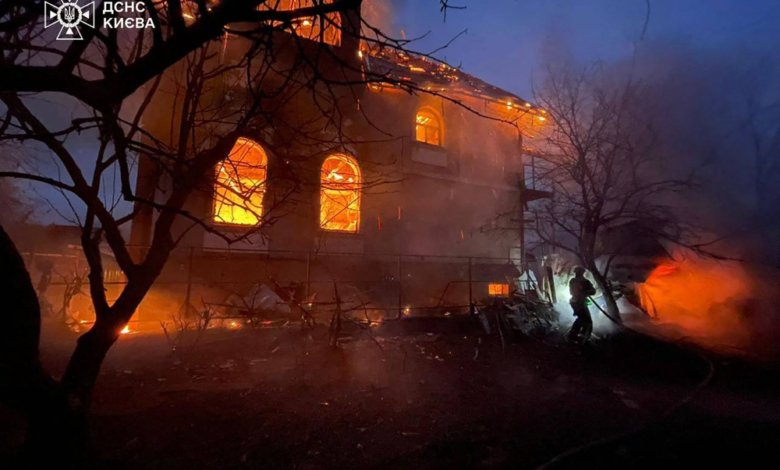
In parallel with the ground offensive, Russian forces launched intensive airstrikes targeting energy infrastructure in and around the Ukrainian capital, Kyiv, leaving more than a million homes without power. Detek, Ukraine's largest energy operator, stated that the strikes cut power to 700,000 subscribers in the capital itself, as well as 400,000 in surrounding areas, adding that emergency teams were working around the clock to repair the extensive damage to the grid.
The context of the war and the timing of the escalation
This dual Russian military escalation, on the ground and in the air, comes at a highly sensitive political juncture, coinciding with preparations for a crucial meeting in the United States between Ukrainian President Volodymyr Zelensky and his American counterpart, Joe Biden. Observers believe that Russia's intensified operations aim to establish a new reality on the ground before any potential negotiations and to send a clear message to the West about Moscow's ability to continue the war and achieve territorial gains despite Western military support for Kyiv.
These attacks on power grids are reminiscent of Moscow's strategy of targeting critical infrastructure in the winter of 2022, aimed at weakening the Ukrainian home front and undermining public morale, as well as disrupting the country's industrial and economic capabilities. With winter approaching, concerns are growing that the humanitarian crisis in Ukraine will worsen if attacks on power generation and transmission stations continue, placing additional pressure on the Ukrainian leadership and its allies to secure more air defense systems.