Agreement between Rif Saudi Arabia and Sakha to support agricultural initiatives
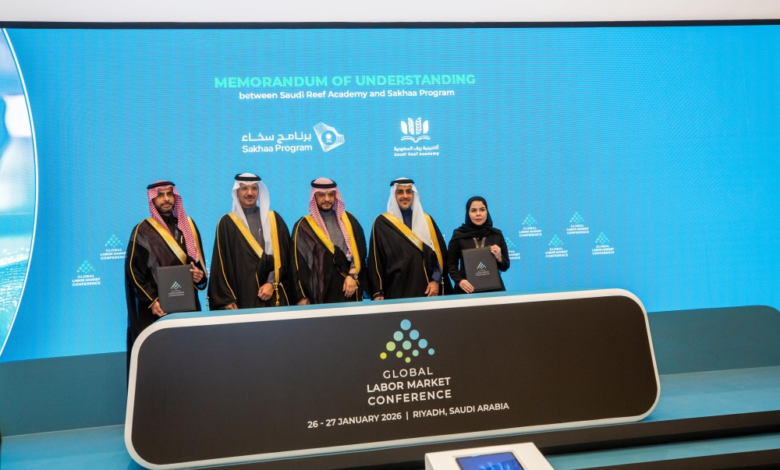
The capital city of Riyadh witnessed a significant step towards enhancing rural and agricultural development, as His Excellency the Deputy Minister of Environment, Water and Agriculture, Engineer Mansour bin Hilal Al-Mashiti, and in the presence of His Excellency the Deputy Minister of Human Resources and Social Development for Labor, Dr. Abdullah bin Nasser Abuthnain, oversaw the signing ceremony of a strategic memorandum of understanding between the Saudi Countryside Academy and the Sakhaa Program. This agreement aims to strengthen joint coordination in implementing a range of high-quality programs and initiatives that contribute to empowering national talent and students in the agricultural sector.
A developmental context that aligns with Vision 2030
This agreement comes at a time when the Kingdom of Saudi Arabia is undergoing radical transformations in its vital sectors as part of its Vision 2030 objectives, with food security and sustainable rural development being top priorities. The Sustainable Agricultural Rural Development Program (Reef Saudi Arabia) is a key pillar in supporting small farmers and productive families, while the “Sakha” program represents a pioneering model in directing development projects with social and economic impact. The signing of this memorandum on the sidelines of the Labor Market Conference underscores the close link between developing the agricultural sector and creating new and sustainable job opportunities for Saudi talent.
Details of the agreement and its parties
The memorandum was signed by Dr. Maha bint Mohammed Al-Dahi, CEO of the Saudi Reef Academy, and Eng. Abdulaziz Mohammed Al-Hussain, Secretary General of the Sakhaa Program. Several leaders and officials from both sides attended the signing ceremony, reflecting the government's strong commitment to fostering partnerships across various sectors.
According to the memorandum, the two parties will work to unify efforts to enable impactful agricultural initiatives and support the preparation of feasibility studies for promising projects. Areas of cooperation also include leveraging the capabilities of entities and organizations in various regions, empowering donors and connecting them with high-quality opportunities that have a measurable impact, ultimately leading to the development of a national portfolio of high-priority agricultural initiatives.
Expected impact: Institutional sustainability and economic growth
This partnership is expected to revolutionize the way agricultural initiatives are managed and implemented, focusing on the transition from individual or haphazard efforts to organized, institutional work. The importance of this collaboration is highlighted by several key points:
- Locally: Strengthening the rural economy by supporting sustainable agricultural projects that provide job opportunities for young people and reduce migration to major cities.
- From a developmental perspective: Activating the role of the third (non-profit) sector in economic development, by directing support and projects towards real and well-studied needs.
- Business governance: Agreeing on a general governance framework and accurate Key Performance Indicators (KPIs) to measure impact, ensuring efficient spending and project sustainability.
In conclusion, this memorandum represents a model of integration between the government and development sectors, and contributes directly to achieving institutional sustainability for agricultural initiatives, thus enhancing the Kingdom’s ability to achieve self-sufficiency in many agricultural products and support the national economy.