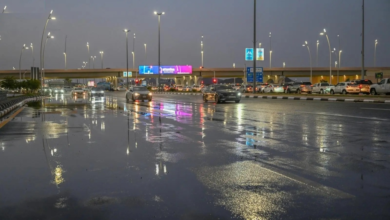
The weather on the first day of Ramadan in Saudi Arabia: rain and dust-raising winds
Weather forecast for the first days of Ramadan
The National Center for Meteorology in Saudi Arabia issued its detailed report on the expected weather conditions at the start of the holy month of Ramadan, indicating that the weather will vary significantly across different regions. According to the report, there remains a chance of light rain in the northern parts of the Kingdom, which is a positive sign at the beginning of the holy month. However, the center warned of the continued impact of active surface winds that will stir up dust and sand, potentially reducing horizontal visibility across large parts of the country.
Climate context and spring fluctuations
These forecasts come amidst the transitional period the Arabian Peninsula experiences with the onset of spring, a season known climatologically for its rapid weather changes. During this time, the region is affected by the passage of low-pressure systems originating from the Mediterranean basin, which cause atmospheric instability. This explains the significant variations in weather, with moderate conditions coinciding with dust storms and rainfall in scattered areas. Active winds, sometimes locally referred to as "Sarayat," are a characteristic feature of this time of year, arising from temperature differences between various air masses.
Expected impact on Ramadan atmosphere
This weather pattern has a direct impact on the daily lives of citizens and residents during Ramadan. Rain, even light rain, is always welcomed as a blessing and helps to moderate the desert climate. On the other hand, dust-laden winds pose a challenge, especially for those with respiratory illnesses and allergies, who are advised to take necessary precautions and avoid direct exposure to dust. These conditions also require extra caution from drivers on highways connecting the affected cities, due to the potential reduction in visibility.
Details of affected areas
The center explained that the dust-laden winds will affect the Northern Borders, Al-Jawf, Tabuk, Hail, and Madinah regions. This will extend to the eastern parts of the Makkah region, as well as the Qassim, Riyadh, and Eastern Province regions. Fog formation is also possible during the night and early morning hours in parts of northern and eastern Saudi Arabia, further emphasizing the importance of taking precautions.
State of the Red Sea and the Arabian Gulf
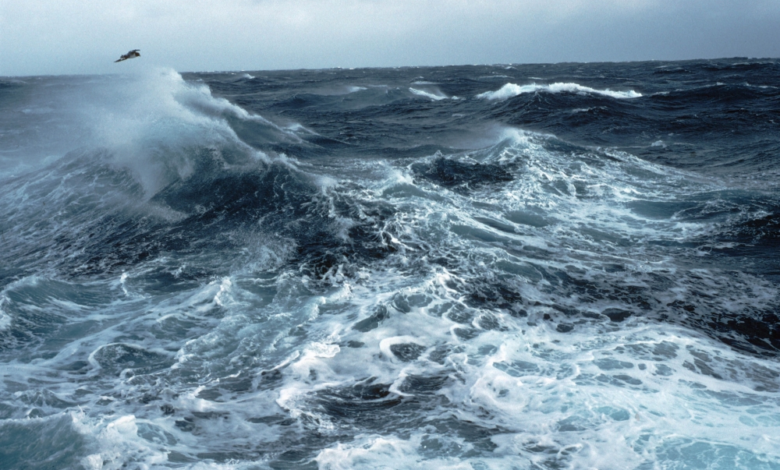
Red Sea: Surface winds will be northwesterly to northerly at speeds of 20-40 km/h in the northern and central parts, and southeasterly to southwesterly at speeds of 15-32 km/h in the southern part. Wave heights will range from 1 to 2 meters in the north and central parts, and from half a meter to 1.5 meters in the south, with sea conditions ranging from slight to moderate.
Arabian Gulf: Surface winds will be southwesterly to southeasterly at a speed of 10-25 km/h, and wave height will be from half a meter to a meter, making the sea state slight.