Putin and the development of Russian nuclear forces after the end of New START
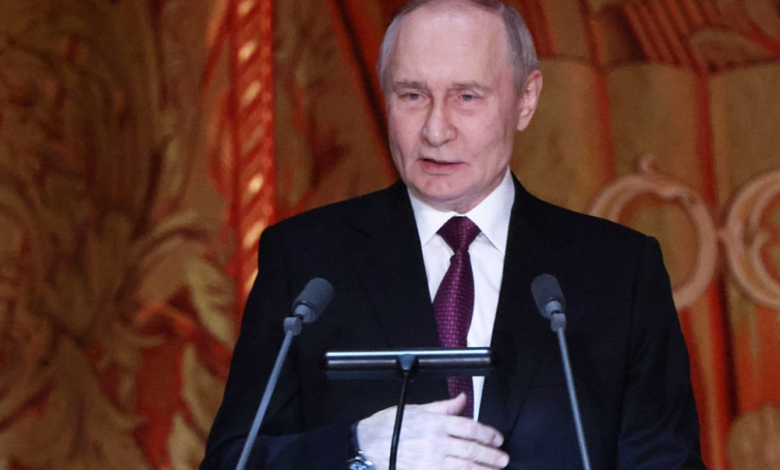
Russian President Vladimir Putin has declared that the development of Russia’s nuclear forces is an “absolute priority,” in a statement reflecting a major strategic shift in Russian defense policy, and coming in the wake of the collapse of the last major nuclear arms reduction treaty with the United States, the New START treaty.
Putin's remarks came during a televised message marking Defender of the Fatherland Day, a national holiday celebrating the Russian Armed Forces. He emphasized that "the development of the nuclear triad, which guarantees effective strategic deterrence and the balance of power in the world, remains our absolute priority." The "nuclear triad" refers to the ability to launch nuclear weapons from land-based platforms (intercontinental ballistic missiles), sea-based platforms (submarines), and air-based platforms (strategic bombers), ensuring a country's capacity for a devastating second strike in the event of a nuclear attack.
Historical background: The end of the arms control era
Putin’s remarks represent the culmination of a period of deteriorating relations between Moscow and Washington, which has seen the collapse of the post-Cold War security architecture. The New START treaty, signed in 2010, placed limits on the number of strategic nuclear warheads that both Russia and the United States could deploy, as well as the missiles and launchers that could carry them. The treaty provided a framework for transparency through reciprocal inspections, which helped build trust and reduce the risk of miscalculation. Although it was extended for five years in 2021, Russia suspended its participation in February 2023, accusing Washington of violating the spirit of the agreement by supporting Ukraine, before it officially expired.
Importance and expected effects
The collapse of the New START treaty and Putin’s declaration of the priority of developing the nuclear arsenal has profound implications at the local, regional and international levels.
On the international level, this development opens the door to a new and unbridled arms race between the world’s two largest nuclear powers. It also puts pressure on other nuclear powers, such as China, which is rapidly expanding its arsenal, to join this race, creating a more dangerous and complex global security environment. The lack of verification and transparency mechanisms increases the risk of miscalculation and accidental conflict.
Regionally, this move is causing considerable concern among NATO member states, particularly in Eastern Europe, where it is perceived as a direct threat. This could prompt NATO members to increase their military spending and strengthen their defense posture, leading to further militarization of the European continent.
Domestically , Putin uses nuclear rhetoric to bolster his image as a strong leader defending Russia's sovereignty and interests against what he calls Western aggression. He also directs state resources toward the military-industrial complex, emphasizing that Russia will leverage the experience gained in the Ukrainian war to strengthen its army and navy across the board.