Pentagon: Iranian attack repelled, defenses successful, no losses

U.S. Central Command (CENTCOM) confirmed in an official statement that its forces, in cooperation with its allies, successfully countered a large-scale Iranian attack targeting Israel, emphasizing that the attack resulted in no casualties among U.S. forces. The statement clarified that the damage to U.S. sites was very limited and did not affect the course of military operations in the region, reflecting the high effectiveness of the combined air defense systems.
Background of the escalation and its historical context
This Iranian attack, dubbed “Operation True Promise,” was a direct response to an airstrike that targeted the Iranian consulate in Damascus, Syria, on April 1, 2024. That strike, attributed to Israel, killed several senior commanders of the Iranian Revolutionary Guard Corps, most notably General Mohammad Reza Zahedi. Targeting a diplomatic mission represented a dangerous escalation in the decades-long proxy conflict between Iran and Israel, prompting Tehran to vow a direct retaliatory strike for the first time from its own territory.
Details of the coordinated attack and defense
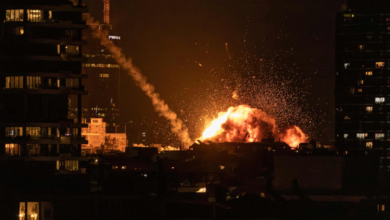
The Iranian attack involved the launch of over 300 projectiles, ranging from ballistic missiles and cruise missiles to suicide drones. Despite the scale of the attack, Israel's multi-layered air defense system (Iron Dome, David's Sling, and Arrow), supported by an unprecedented international coalition, intercepted and destroyed approximately 99% of the threats before they reached their targets. US forces played a pivotal role in this defense, with destroyers and warships in the eastern Mediterranean, along with fighter jets, intercepting dozens of missiles and drones. Forces from Britain, France, and Jordan also participated in the defensive operation, demonstrating a high level of international military coordination.
Regional and international importance and impacts
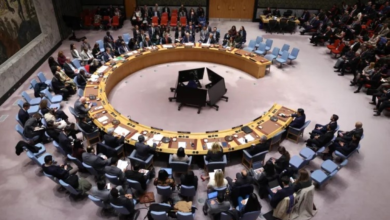
This event holds immense strategic significance, transforming the Iranian-Israeli conflict from a shadow war into a direct and open confrontation. While the Iranian response was calculated to avoid a full-blown war, it nonetheless raised tensions in the Middle East to unprecedented levels and sparked international fears of a wider regional conflict. Internationally, the attack triggered a wave of condemnations and calls for restraint from world powers, and international diplomacy intensified its efforts to contain the situation and prevent further escalation. The success of the joint defense is seen as a demonstration of the strength of Western deterrence and military alliances in the region, while analysts believe that Iran achieved a strategic objective by proving its ability to strike Israel directly.