Pakistani airstrikes on Kabul and Kandahar: a dangerous military escalation
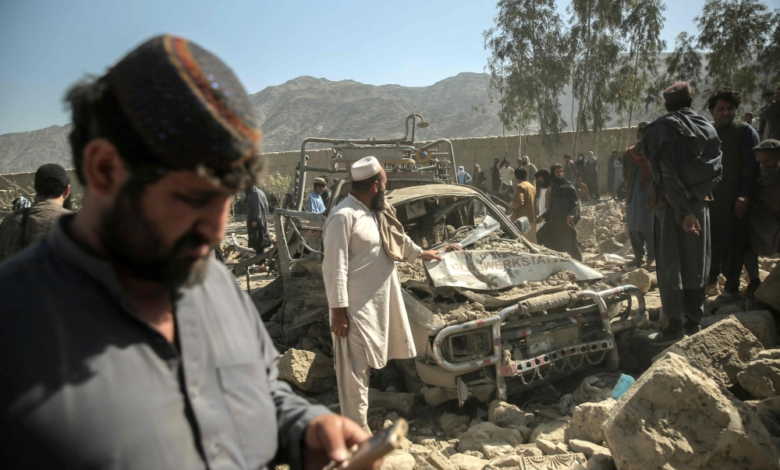
In a dangerous military escalation, powerful explosions rocked the Afghan capital, Kabul, and other cities early Friday morning, after Pakistan launched airstrikes targeting locations inside Afghanistan, including Kabul and Kandahar. These strikes were a direct response to an attack by the Taliban government on Pakistani military posts along the border, signaling an unprecedented deterioration in relations between the two neighboring countries.
The Pakistani government confirmed its responsibility for the airstrikes, with Information Minister Attaullah Tarar stating that the strikes targeted “defensive targets” belonging to the Afghan Taliban in Kabul and the provinces of Paktia and Kandahar. According to eyewitnesses and news agencies, loud explosions were heard in Kabul around 1:50 a.m., coinciding with fighter jets flying overhead, followed by gunfire. Local residents reported hearing up to eight explosions in different areas.
Background to border tensions between Pakistan and Afghanistan
This confrontation was not a spontaneous event, but rather the culmination of years of escalating tensions along the 2,670-kilometer shared border, known as the Durand Line, which no Afghan government has historically recognized. Islamabad has long accused Kabul of providing safe haven to fighters of the Pakistani Taliban (TTP), an armed group that carries out deadly attacks inside Pakistan. These attacks have increased significantly since the Afghan Taliban returned to power in August 2021, despite the group's continued denials of these accusations and its insistence that it will not allow its territory to be used to threaten the security of neighboring countries.
The importance of the event and its expected impact
This direct military escalation has serious repercussions at the local, regional, and international levels. Locally, it exacerbates the suffering of the Afghan people, who are already facing a dire humanitarian and economic crisis. Regionally, the outbreak of open conflict between two nuclear powers (Pakistan) and a strategically located country (Afghanistan) threatens to destabilize the entire South and Central Asia region, potentially triggering new waves of refugees and disrupting counterterrorism efforts. Internationally, major powers such as China and the United States are following this development with grave concern, given their strategic interests and investments in the region. This conflict could impact economic initiatives like the China-Pakistan Economic Corridor and further complicate global security challenges.