Explanation of developer domain colors 2026 and the new localization guide
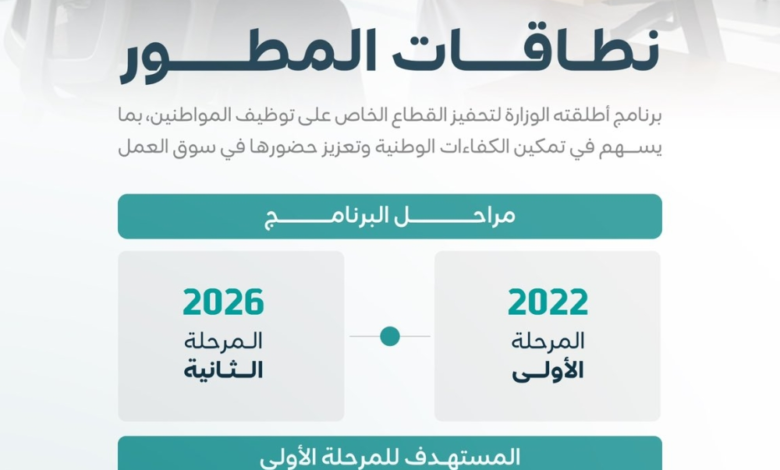
In a strategic move aimed at reshaping the labor market in the Kingdom of Saudi Arabia, the Ministry of Human Resources and Social Development has adopted the updated procedural guide for the “Developed Nitaqat” program for the year 2026. This step comes to enhance market efficiency and raise localization rates in private sector establishments, in direct line with the objectives of the Kingdom’s Vision 2030, which seeks to build a prosperous economy with national talent.
Program context and its historical development
The Nitaqat program was not a spur-of-the-moment decision, but rather the culmination of years of continuous development of labor policies in the Kingdom. Since its inception, the program has undergone several phases, all aimed at addressing labor market distortions and reducing the excessive reliance on expatriate labor in non-specialized professions. The transition to the "Developed Nitaqat" program represents a qualitative leap forward, based on integrating related economic activities and establishing a long-term localization plan. This provides the private sector with operational stability and greater capacity for future human resource planning, moving beyond temporary solutions.
The meanings of the five colors in developer domains
The program adopts a precise mechanism for classifying establishments based on their performance in localization, where they were divided into five color ranges that determine the fate of the establishment in terms of services and facilities:
- Platinum scope: Represents the pinnacle of commitment, and establishments within it enjoy the highest degree of flexibility, including the immediate renewal of work permits regardless of the length of stay, and the transfer of services to it from any other scope.
- High Green Zone: Its facilities enjoy high competitive advantages, including changing professions and receiving visas for productive professions, which enhances its operational stability.
- The medium green zone: the equilibrium phase that allows basic services such as visa processing and job changes, with ongoing incentives to move to higher levels.
- The low green zone: This is the first warning zone, where establishments face restrictions including the suspension of new visas and changes of professions, while allowing license renewals under certain conditions, to push them towards improving localization rates.
- The red zone: represents the dangerous area, where the establishment is deprived of almost all basic services. It cannot renew work permits, transfer new workers to it, or change professions, which puts it before two options: urgent correction or exiting the market.
The technical mechanism and the expected economic impact
The procedural guide clarified that the calculation of percentages is not arbitrary, but rather based on a mathematical equation using a logarithmic function to ensure fairness among establishments of varying sizes. This regulation is expected to have a broad economic impact, not only reducing unemployment rates, but also improving the quality of services provided, increasing productivity, and injecting liquidity into the local economy through salaries paid to national workers.
Preliminary data has shown the success of these policies, with the education, health, communications, and manufacturing sectors topping the localization lists, reflecting the private sector’s response to government incentives and its pursuit of business sustainability through investment in Saudi human capital.