Organizing wilderness camps: licensing requirements and 8 important prohibitions
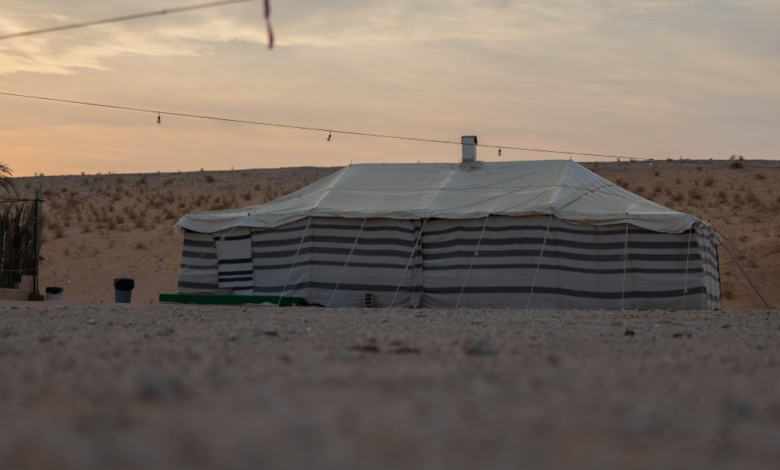
The National Center for Vegetation Development and Combating Desertification in Saudi Arabia announced the issuance of new regulations for desert campsites, a strategic step aimed at organizing camping activities and protecting natural resources across the Kingdom. This move seeks to strike a delicate balance between fulfilling the desires of campers to practice this deeply rooted Saudi cultural pastime and the necessity of preserving and sustaining the environment within the established regulatory framework.
Environmental and historical context: From randomness to sustainable organization
Desert camping trips, locally known as "kashta," are an integral part of Saudi Arabia's cultural heritage, with residents traditionally venturing into the desert and wilderness during the rainy season and spring. However, recent decades have witnessed haphazard practices that have led to the degradation of vegetation cover and exacerbated desertification, necessitating decisive regulatory intervention.
These new regulations align with the goals of Saudi Vision 2030 and the Green Saudi Arabia initiative, which prioritize environmental protection and vegetation development. This regulatory shift aims to transform camping from a potentially harmful practice into a regulated and sustainable recreational activity that contributes to ecotourism without disrupting the natural balance.
Expected impact: Protecting resources and promoting environmental awareness
The implementation of these regulations is expected to have a tangible positive impact at both the local and regional levels. Locally, the controls will help curb illegal logging and the indiscriminate trampling of vegetation, allowing for natural regeneration. These measures will also raise environmental awareness within the community, reinforcing the principle of "leaving no trace." Regionally, the Kingdom's efforts to combat desertification and regulate land use will strengthen its position as a leading country in environmental conservation in the Middle East.
Licensing mechanism and camp classification
The center explained that the new regulations govern the electronic issuance of licenses for desert camping activities and limit daily camping periods to a maximum of 24 hours for individual outings without extended overnight stays. The regulations also classify campsites into several categories:
- Non-investment camps: designated for personal or family use with an area not exceeding 2000 square meters.
- Investment camps: These are designated for commercial and tourism activities, and their area is determined according to investment contracts.
- Government camps and business camps: Their area is determined according to need, with a maximum of 20,000 square meters, and they are used for official events or exploration purposes.
Site selection guidelines and the eight prohibited items
The regulations stipulated that campsites must be located away from valleys and floodplains to ensure safety, and outside areas of high environmental sensitivity. The regulations also emphasized eight key prohibitions that campers must avoid to prevent penalties:
- Violating the public decency regulations or related rules and regulations.
- Cutting down or damaging trees or shrubs, or practicing logging and grazing in places other than their designated areas.
- Lighting a fire directly on the ground (using firewood or charcoal) in places other than those designated for firewood.
- Erecting earthen fences or barriers that impede normal movement or distort the general view (only sails with a height not exceeding 3 meters are allowed).
- Erecting structures that impede the flow of floods or lead to soil erosion.
- The use of cement or asphalt materials inside the camp.
- Carrying out afforestation or sowing seeds without prior authorization (to avoid invasive species).
- Using drones for filming without obtaining the necessary security permits.
The center affirmed its commitment to addressing violations by obligating those responsible to remove the damage, rehabilitate the affected sites, and pay appropriate compensation, to ensure the sustainability of wildlife parks for future generations.