Meteorological authorities warn of dense fog and reduced visibility in 7 regions of Saudi Arabia
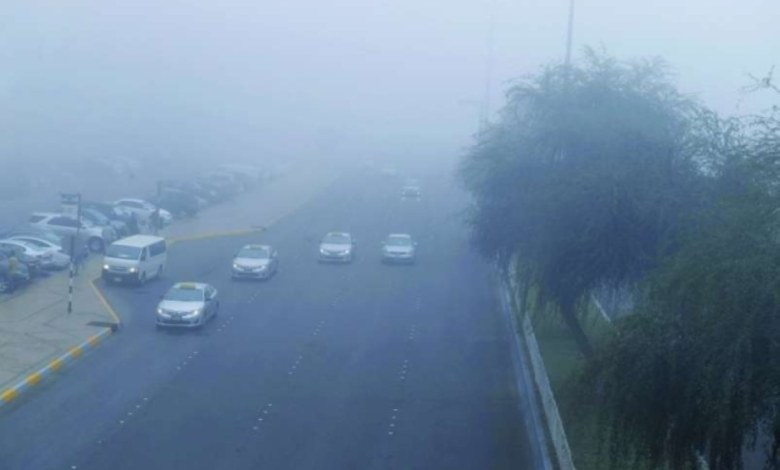
The National Center for Meteorology in Saudi Arabia issued weather Wednesday, warning of varying intensities of fog, reaching dense levels across large parts of seven administrative regions in the Kingdom. These warnings are part of the ongoing monitoring of weather fluctuations affecting the country during this transitional period.
Weather details and affected areas
The weather report indicated that the phenomenon began in the early morning hours and is expected to continue until 8:00 AM in some areas, and until 9:00 AM in others. The accompanying effects include a significant decrease in horizontal visibility, ranging between 3 and 5 kilometers, and reaching near-zero visibility (1 to 3 kilometers) in some locations, while it will be completely obscured (less than 1 kilometer) in areas of dense fog.
The center identified the affected areas and cities as follows:
- Eastern Province: The warnings included Jubail, Khobar, Dammam, Qatif, Ras Tanura, Al-Ahsa, Abqaiq, Khafji, Nairyah, Qaryat Al-Ulya, Hafr Al-Batin, and many others.
- Makkah Region: Rabigh, Al-Shuaiba, Al-Lith, Al-Qunfudhah, Jeddah, and Taif were all affected.
- Al-Baha region: The fog included Al-Mandaq, Baljurashi, Bani Hassan, and Qalwa.
- Al-Jawf region: Al-Qurayyat, Tabarjal, Dumat Al-Jandal, and Sakaka.
- Northern borders: Tarif, Rafha, Al-Uwaiqilah, and Arar.
- Asir region: Al-Barak, Al-Qahmah, Al-Namas, Balqarn, Tanomah, Abha, Ahad Rafidah, and Khamis Mushait.
- Jazan region: Al Darb, Bish, Al Harth, Al Dayer, Al Reeth, Al Ardah, Al Eidabi, Fifa, and Haroub.
The importance of warnings and safety measures
These warnings are of paramount importance given the direct impact of fog on traffic, especially on highways and open roads connecting governorates. Authorities, such as the General Directorate of Traffic and Road Security, typically urge drivers to exercise caution while driving in such conditions, use fog lights, avoid speeding, and maintain a safe following distance to prevent traffic accidents that may result from poor visibility.
Climate context and the role of meteorology
Early morning fog is a common natural phenomenon at this time of year in the Kingdom, where high humidity and low minimum temperatures contribute to the condensation of water vapor near the Earth's surface. The National Center of Meteorology, using advanced technology and modern weather radars, monitors these phenomena with high accuracy and issues early warnings (red and orange) to ensure the safety of lives and property, and to enable government and service agencies to take the necessary measures to address the weather conditions.