The Islamic world and Saudi Arabia condemn the terrorist bombing in Kabul
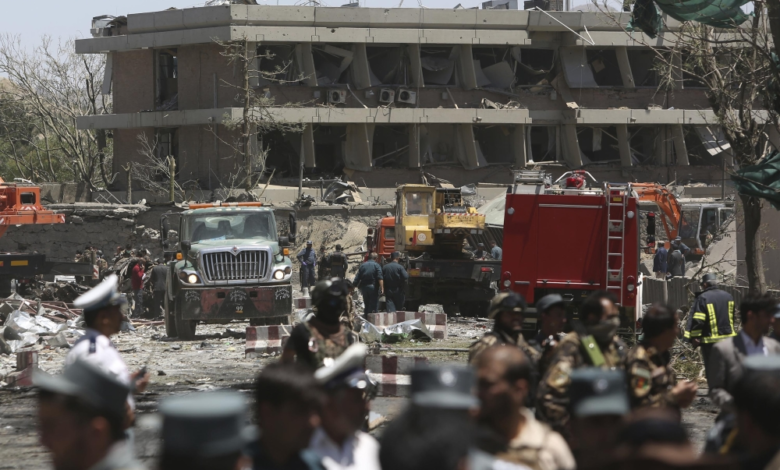
The Muslim World League and the Kingdom of Saudi Arabia expressed their strong condemnation and denunciation of the treacherous terrorist bombing that targeted the Afghan capital, Kabul, which resulted in a number of casualties and injuries, including Afghan citizens and Chinese nationals, in an incident that has once again highlighted the security challenges facing the country.
The position of the Muslim World League
In an official statement issued by the General Secretariat of the Muslim World League, His Excellency the Secretary-General of the League and Chairman of the Council of Muslim Scholars, Sheikh Dr. Muhammad bin Abdulkarim Al-Issa, reaffirmed the League's firm and principled stance rejecting all forms of violence and terrorism, regardless of their motives or justifications. Dr. Al-Issa expressed the League's full solidarity with Afghanistan and its people in confronting all threats to their security and stability, emphasizing that such criminal acts are contrary to all divine laws and human values.
His Excellency offered his sincere condolences and sympathy to the families of the victims and to the Afghan people, asking God Almighty to have mercy on the deceased and to grant the injured a speedy recovery, calling for concerted efforts to eradicate the roots of extremism.
Condemnation of the Kingdom of Saudi Arabia
For its part, the Kingdom of Saudi Arabia issued a strongly worded statement condemning the terrorist bombing, affirming its full support for the friendly Afghan people in confronting all forms of violence, extremism, and terrorism. The Kingdom reiterated its call to the international community to intensify efforts to eradicate this scourge that threatens international peace and security, and expressed its sincere condolences to the families of the victims and its wishes for a speedy recovery for the injured.
Security context and current challenges
This bombing comes at a sensitive time for Afghanistan, a country facing complex security challenges since the major political changes of August 2021. Despite a decrease in large-scale military operations, sophisticated attacks targeting civilians, public places, diplomatic missions, and hotels frequented by foreigners remain a significant security concern. International reports indicate that extremist groups, such as ISIS-Khorasan, are attempting to exploit security gaps to destabilize the country and assert their presence through bloody operations aimed at undermining peace efforts.
Expected dimensions and effects
Targeting foreign nationals, particularly those of Chinese origin, carries significant political and economic implications. Economically, China is a major potential partner in reconstruction projects and investment in Afghanistan's mining and energy sectors. Those who perpetrate such attacks aim to isolate Afghanistan internationally and undermine confidence in the current authorities' ability to protect foreign missions and investors, potentially leading to the suspension or slowdown of vital development projects desperately needed by the Afghan people.
Regionally, the continuation of these bombings is causing concern among neighboring countries, which fear the spread of terrorism across borders, leading to increased regional security cooperation and demands for stricter security guarantees from the authorities in Kabul to ensure that Afghan territory is not used as a launching pad for terrorist attacks.